Beginner’s guide · Make & create
Pinch, coil and join
before you reach for a wheel.
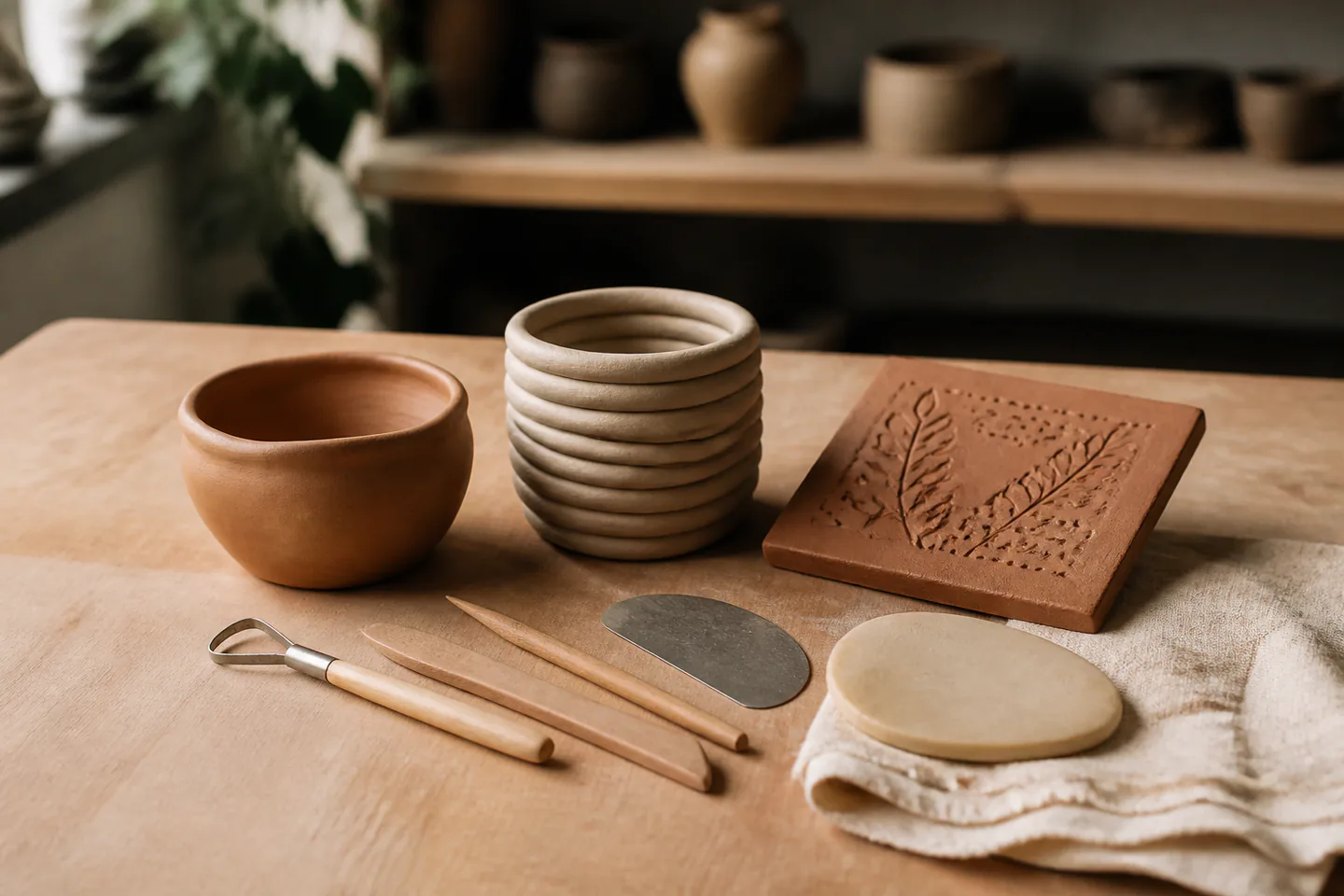
Hand-building pottery starts with one small pinch pot, controlled wall thickness and a firing plan agreed before the clay is opened.
Quick answer
Build one small, controlled result first
Make one palm-sized pinch pot from studio-approved clay. Compress the base, keep the rim even, add only a small scored-and-slipped detail, then dry it slowly before the studio inspects and fires it.
- 01
Agree the clay body, glaze rules, maximum dimensions, firing cost and delivery condition with the kiln service before buying clay. Keep the first attempt narrow enough that preparation, the main action and the result can all be reviewed together.
- 02
Keep wall thickness, clay moisture and join moisture consistent; score and slip only where the clay body and teacher recommend it. Keep the first attempt narrow enough that preparation, the main action and the result can all be reviewed together.
- 03
Use gentle light and touch to find a heavy base, thin rim, trapped air, cracks or unsupported joins while correction is still possible. Keep the first attempt narrow enough that preparation, the main action and the result can all be reviewed together.
- 04
Scrape reusable clay into its proper container, wipe surfaces damp and never put clay slurry into household drains. Keep the first attempt narrow enough that preparation, the main action and the result can all be reviewed together.
What to expect
Accuracy comes from the sequence, not the size of the toolkit
Preparation, one controlled variable and an honest inspection matter more than collecting specialist equipment.
The first attempt
A small pinch pot teaches compression, support and drying more clearly than a large sculpture or a set of mismatched techniques. For hand-building pottery, note what actually happened rather than relying on memory; that turns the next attempt into a controlled change instead of another guess.
The control point
Keep wall thickness, clay moisture and join moisture consistent; score and slip only where the clay body and teacher recommend it. For hand-building pottery, note what actually happened rather than relying on memory; that turns the next attempt into a controlled change instead of another guess.
The useful signal
Use gentle light and touch to find a heavy base, thin rim, trapped air, cracks or unsupported joins while correction is still possible. For hand-building pottery, note what actually happened rather than relying on memory; that turns the next attempt into a controlled change instead of another guess.
The common trap
Adding handles, thick bases and wet decoration before the body is stable creates cracking and uneven drying. For hand-building pottery, note what actually happened rather than relying on memory; that turns the next attempt into a controlled change instead of another guess.
Core method
Prepare, make, inspect and reset
Prepare deliberately
Agree the clay body, glaze rules, maximum dimensions, firing cost and delivery condition with the kiln service before buying clay. For hand-building pottery, note what actually happened rather than relying on memory; that turns the next attempt into a controlled change instead of another guess.
Control the central variable
Keep wall thickness, clay moisture and join moisture consistent; score and slip only where the clay body and teacher recommend it. For hand-building pottery, note what actually happened rather than relying on memory; that turns the next attempt into a controlled change instead of another guess.
Read the result
Use gentle light and touch to find a heavy base, thin rim, trapped air, cracks or unsupported joins while correction is still possible. For hand-building pottery, note what actually happened rather than relying on memory; that turns the next attempt into a controlled change instead of another guess.
Reset before repeating
Scrape reusable clay into its proper container, wipe surfaces damp and never put clay slurry into household drains. For hand-building pottery, note what actually happened rather than relying on memory; that turns the next attempt into a controlled change instead of another guess.
Useful products
Products with a clear job in the setup
Use only clay accepted by the firing studio. A small tool set and soft rib support pinch, coil and slab work without implying that a home kiln is necessary.
Industrial Plasters Ltd School Clay Buff Stoneware Clay, 12.5 kg
A known body makes drying, joining and firing results easier to compare.
Kemper Pottery Tool Kit, 8-piece
The small set supports several hand-building methods without filling the table with gadgets.
Mudtools Shape 1 Polymer Rib, Yellow Soft
A flexible rib evens joins without removing too much clay.
First project
Make a palm-sized pinch pot
The goal is an even, well-compressed form that survives drying, not a perfectly round vessel.
- 01
Set up
Agree the clay body, glaze rules, maximum dimensions, firing cost and delivery condition with the kiln service before buying clay. For hand-building pottery, note what actually happened rather than relying on memory; that turns the next attempt into a controlled change instead of another guess.
- 02
Begin the first attempt
A small pinch pot teaches compression, support and drying more clearly than a large sculpture or a set of mismatched techniques. For hand-building pottery, note what actually happened rather than relying on memory; that turns the next attempt into a controlled change instead of another guess.
- 03
Hold one variable steady
Keep wall thickness, clay moisture and join moisture consistent; score and slip only where the clay body and teacher recommend it. For hand-building pottery, note what actually happened rather than relying on memory; that turns the next attempt into a controlled change instead of another guess.
- 04
Inspect the result
Use gentle light and touch to find a heavy base, thin rim, trapped air, cracks or unsupported joins while correction is still possible. For hand-building pottery, note what actually happened rather than relying on memory; that turns the next attempt into a controlled change instead of another guess.
- 05
Reset and record
Scrape reusable clay into its proper container, wipe surfaces damp and never put clay slurry into household drains. For hand-building pottery, note what actually happened rather than relying on memory; that turns the next attempt into a controlled change instead of another guess.
What can wait
What can wait until the first result
Delay equipment that solves no repeated problem in the first small project.
- 01
A large first setup
Scale multiplies Adding handles, thick bases and wet decoration before the body is stable creates cracking and uneven drying. before the basic routine is known. For hand-building pottery, note what actually happened rather than relying on memory; that turns the next attempt into a controlled change instead of another guess.
- 02
Premium specialist equipment
It should solve a limitation you can describe after several hand-building pottery sessions. For hand-building pottery, note what actually happened rather than relying on memory; that turns the next attempt into a controlled change instead of another guess.
- 03
Several methods at once
Changing materials and technique together makes the cause of a result hard to see. For hand-building pottery, note what actually happened rather than relying on memory; that turns the next attempt into a controlled change instead of another guess.
- 04
Buying for a future version
Finish and review the small route before equipping an imagined advanced practice. For hand-building pottery, note what actually happened rather than relying on memory; that turns the next attempt into a controlled change instead of another guess.
Upgrade path
Upgrade the repeated limitation
Add capacity only after the basic process is repeatable.
Try it
About £25–£60 plus firingApproved clay, board and household spoon
Complete one meaningful result and learn the whole sequence.Repeat it
About £25–£60 plus firingTool set, rib and controlled drying box
Reduce setup friction and compare several attempts.Improve the bottleneck
£100–£400Slab roller access or studio membership
Address Adding handles, thick bases and wet decoration before the body is stable creates cracking and uneven drying. with a targeted change.Go deeper
VariableGlaze testing and larger joined forms
Add scale, precision or public participation with evidence from practice.Safety & care
Clay dust and firing belong in a controlled process
Wet-clean the workspace and let an established studio control kiln compatibility and firing.
- Wet-wipe clay and avoid dry sweeping or sanding that raises respirable silica dust. Follow current manufacturer, food-safety, access, wildlife or local guidance wherever it applies.
- Keep food tools and preparation surfaces separate from clay and glaze materials. Follow current manufacturer, food-safety, access, wildlife or local guidance wherever it applies.
- Do not fire unknown clay, found objects or sealed hollow forms. Follow current manufacturer, food-safety, access, wildlife or local guidance wherever it applies.
- Use only glazes approved for the studio schedule and intended function. Follow current manufacturer, food-safety, access, wildlife or local guidance wherever it applies.
- Lift clay and boards within comfortable limits and support fragile leather-hard work from below. Follow current manufacturer, food-safety, access, wildlife or local guidance wherever it applies.
Outside help
When outside help earns its place
A community pottery studio earns its place immediately because it supplies compatible clay, drying advice, kiln access and live correction.
Use one complete lesson that covers preparation, the central technique, common mistakes and finishing. For a first hand-building pottery attempt, one coherent method is easier to diagnose than fragments collected from several creators.
Outside help earns its place when safe setup, access, identification or live correction removes a real obstacle. Ask what equipment, materials, access and follow-up support are included before booking.
Representative UK learning options checked 31 August 2026; local prices, access, materials and tutor support vary.
Sources
Where the guidance came from
Studio and clay-body rules control firing; ceramic teaching sources support the pinch, coil, slab and slow-drying method.
-
01
Crafts Council · Pottery
Pottery methods and craft context.
Open source -
02
Health and Safety Executive · Silica
UK respirable crystalline silica risk guidance.
Open source -
03
Potclays · Technical information
UK clay and firing technical context.
Open source -
04
Ceramic Arts Network · Handbuilding
Pinch, coil, slab and joining techniques.
Open source -
05
Reddit · r/Pottery
Community evidence on drying, joins, firing services and beginner tools.
Open source -
06
Amazon UK · School Clay Buff Stoneware Clay, 12.5 kg
Exact Amazon UK product page or ISBN used for the recommendation; current price, seller, specification and availability should be confirmed.
Open source -
07
Amazon UK · Pottery Tool Kit, 8-piece
Exact Amazon UK product page or ISBN used for the recommendation; current price, seller, specification and availability should be confirmed.
Open source -
08
Amazon UK · Shape 1 Polymer Rib, Yellow Soft
Exact Amazon UK product page or ISBN used for the recommendation; current price, seller, specification and availability should be confirmed.
Open source
Guide information and links checked 31 August 2026.