Beginner’s guide · Make & create
Turn fibre
into your own yarn.
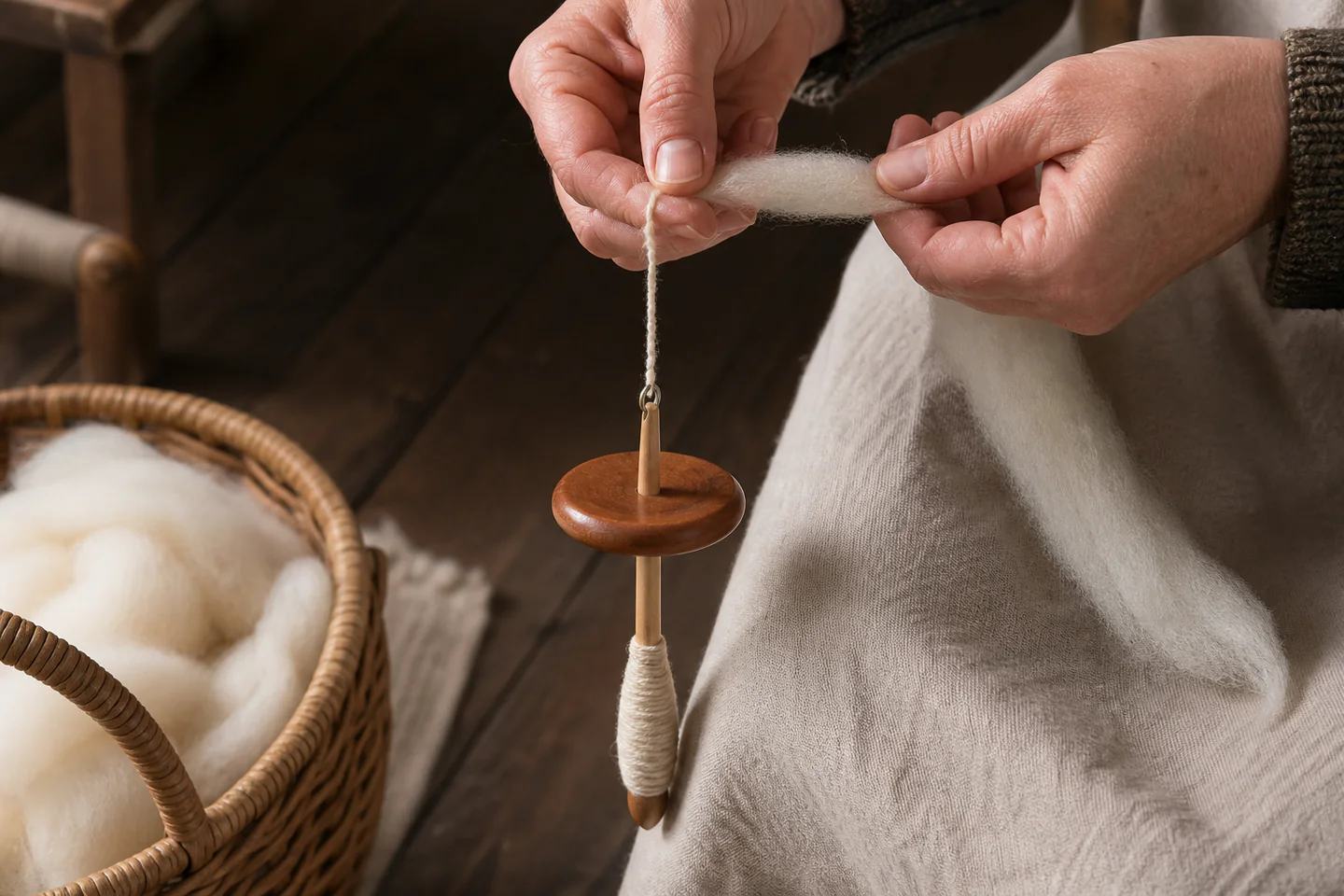
A drop spindle and prepared wool fibre let you learn drafting, twist and plying without buying a spinning wheel. Expect uneven first yarn; understanding why it changes is the real first result.
Quick answer
Begin with park-and-draft on a drop spindle
Choose a medium-weight top-whorl spindle and prepared, grippy wool roving. Add twist while the spindle is parked, then draft a short section before letting the spindle turn again.
- 01
Use prepared wool with a medium staple and some grip rather than slippery luxury fibre. Note the material, setting or measurement used so the result can be repeated or changed for a reason.
- 02
Keep hands far enough apart that only the drafted zone thins. Note the material, setting or measurement used so the result can be repeated or changed for a reason.
- 03
Prevent twist entering the fibre supply until the next section is ready. Note the material, setting or measurement used so the result can be repeated or changed for a reason.
- 04
Wind spun yarn onto the shaft regularly so the working length stays controllable. Note the material, setting or measurement used so the result can be repeated or changed for a reason.
- 05
Judge progress by greater consistency and fewer breaks, not commercial-looking first yarn. Note the material, setting or measurement used so the result can be repeated or changed for a reason.
What to expect
Draft and twist compete for attention at first
The spindle is mechanically simple, but hands must learn to manage fibre supply, thickness and stored twist as separate jobs.
Drafting
Fibre slides only when the hands are outside the staple length. Gripping too close locks the supply and creates thick-thin jumps. For yarn spinning, check this deliberately while the work is still easy to alter; correcting it after the next stage usually costs more time or materials.
Twist
Too little twist lets the single drift apart; too much makes it hard and corkscrewed. Both can happen in one first skein. For yarn spinning, check this deliberately while the work is still easy to alter; correcting it after the next stage usually costs more time or materials.
Spindle behaviour
A balanced spindle should rotate cleanly, but yarn thickness and winding position also affect how long it spins. For yarn spinning, check this deliberately while the work is still easy to alter; correcting it after the next stage usually costs more time or materials.
Plying
Combining two singles in the opposite direction balances some twist and creates a more usable yarn. It is a second skill, not a cosmetic step. For yarn spinning, check this deliberately while the work is still easy to alter; correcting it after the next stage usually costs more time or materials.
Core method
Separate drafting from spinning
Prepare the fibre
Split roving lengthwise into manageable strips and lightly pre-draft a section so the fibres can move without force. For yarn spinning, check this deliberately while the work is still easy to alter; correcting it after the next stage usually costs more time or materials.
Make a leader
Tie waste yarn securely to the spindle, spiral it up the shaft and catch it in the hook or notch. For yarn spinning, check this deliberately while the work is still easy to alter; correcting it after the next stage usually costs more time or materials.
Park and draft
Spin the spindle, hold it still, pinch the twist and draft a short even section before allowing twist to travel upward. For yarn spinning, check this deliberately while the work is still easy to alter; correcting it after the next stage usually costs more time or materials.
Wind and repeat
Wind the completed single onto the shaft in a tidy cop, leave a working length and repeat without rushing. For yarn spinning, check this deliberately while the work is still easy to alter; correcting it after the next stage usually costs more time or materials.
Useful products
Products with a clear job in the setup
A matched spindle-and-fibre kit is the cleanest start. Extra roving and one dependable reference extend practice without pretending a wheel is required.
World of Wool Hand Wool Spinning Starter Kit with Drop Spindle and Heritage Wool
Prepared heritage wool has enough grip for park-and-draft practice and the kit avoids separate compatibility guesses.
ULTNICE Natural White Wool Roving Fibre, 200 g
A pale consistent roving makes thickness and twist easier to inspect.
Search Press Yarn Spinning with a Modern Twist
It keeps the learning route aligned with the inexpensive spindle setup.
First project
Spin and ply a deliberately small sample
Twenty or thirty grams is enough to learn the full path from fibre to washed skein without managing an unwieldy cop.
- 01
Split and pre-draft
Divide the roving into two similar strips, open compacted fibres gently and make an easy-to-draft starting end. For yarn spinning, check this deliberately while the work is still easy to alter; correcting it after the next stage usually costs more time or materials.
- 02
Spin the first single
Use park-and-draft, winding on every comfortable arm length and joining breaks by overlapping teased fibres. For yarn spinning, check this deliberately while the work is still easy to alter; correcting it after the next stage usually costs more time or materials.
- 03
Spin the second
Repeat in the same spin direction, aiming for the same approximate thickness rather than perfect uniformity. For yarn spinning, check this deliberately while the work is still easy to alter; correcting it after the next stage usually costs more time or materials.
- 04
Ply in reverse
Bring the two singles together and add plying twist in the opposite direction, watching how the yarn relaxes. For yarn spinning, check this deliberately while the work is still easy to alter; correcting it after the next stage usually costs more time or materials.
- 05
Skein and finish
Wind a small skein, tie it in several places, wash according to the fibre and hang without excessive weight. For yarn spinning, check this deliberately while the work is still easy to alter; correcting it after the next stage usually costs more time or materials.
What can wait
What can wait until the first result
A wheel is faster only after drafting and twist make sense; it does not remove the fundamental coordination.
- 01
Spinning wheel
A drop spindle teaches the same fibre and twist relationship at a slower, more observable pace. For yarn spinning, check this deliberately while the work is still easy to alter; correcting it after the next stage usually costs more time or materials.
- 02
Luxury fibre
Silk, alpaca and very fine merino can be slippery or compact easily. Learn joins and consistency with forgiving wool. For yarn spinning, check this deliberately while the work is still easy to alter; correcting it after the next stage usually costs more time or materials.
- 03
Large processing tools
Carders and blending boards matter when preparing raw or custom fibre, not for ready-to-spin roving. For yarn spinning, check this deliberately while the work is still easy to alter; correcting it after the next stage usually costs more time or materials.
Upgrade path
Upgrade the repeated limitation
Upgrade because production speed, fibre preparation or yarn design has become the repeated constraint.
Try it
£20–£45Drop-spindle kit and prepared wool
Draft, twist, wind-on and joins can be seen clearly.Build consistency
£15–£40 extraMore known roving, niddy-noddy and sample labels
Singles can be compared and finished repeatably.Prepare fibre
£40–£150+Hand cards or blending board with suitable fleece
Colour and fibre blends become part of yarn design.Move to a wheel
£250–£800+Tried or second-hand spinning wheel plus tuition
Longer yardage becomes faster once drafting is already understood.Safety & care
Keep fibre clean and moving parts controlled
Hand spinning is calm work, but loose fibre, long yarn and repetitive hand positions require attention.
- Keep rotating spindles clear of feet, breakables, pets and other people. Follow the current instructions supplied with the exact material or tool.
- Store long singles and loose fibre so they cannot entangle children or animals. Follow the current instructions supplied with the exact material or tool.
- If fibre dust or wool contact causes symptoms, stop and improve ventilation or change material. Follow the current instructions supplied with the exact material or tool.
- Take hand, wrist and shoulder breaks before grip becomes tight or painful. Follow the current instructions supplied with the exact material or tool.
Outside help
When outside help earns its place
A clear park-and-draft video is enough to make a first single. A guild session is particularly valuable before buying a wheel because models fit bodies and spinning styles differently.
Use one complete lesson that includes preparation, the working method, troubleshooting and finishing. Avoid combining measurements from several creators on the first attempt.
Ask whether materials, safe tool use, individual correction and a finished take-home result are included before booking.
Representative UK learning options checked 29 August 2026; local prices, access, materials and tutor support vary.
Sources
Where the guidance came from
The method is grounded in specialist and manufacturer guidance, then checked against recurring beginner problems and the exact products linked here.
-
01
Association of Guilds of Weavers, Spinners and Dyers
UK guild network and spinning-learning context.
Open source -
02
The Spinning Guild
Specialist hand-spinning practice and education.
Open source -
03
Schacht · Spinning resources
Manufacturer tutorials on spindle, wheel and fibre fundamentals.
Open source -
04
Ashford · Learn to spin
Established equipment maker’s practical spinning tutorials.
Open source -
05
Woolmark · Wool fibre
Reference context for wool fibre properties and care.
Open source -
06
Amazon UK · Hand Wool Spinning Starter Kit with Drop Spindle and Heritage Wool
Exact product catalogue page or ISBN used for the recommendation; current price, seller, specification and availability should be confirmed.
Open source -
07
Amazon UK · Natural White Wool Roving Fibre, 200 g
Exact product catalogue page or ISBN used for the recommendation; current price, seller, specification and availability should be confirmed.
Open source -
08
Amazon UK · Yarn Spinning with a Modern Twist
Exact product catalogue page or ISBN used for the recommendation; current price, seller, specification and availability should be confirmed.
Open source
Guide information and links checked 29 August 2026.