Beginner’s guide · Make & create
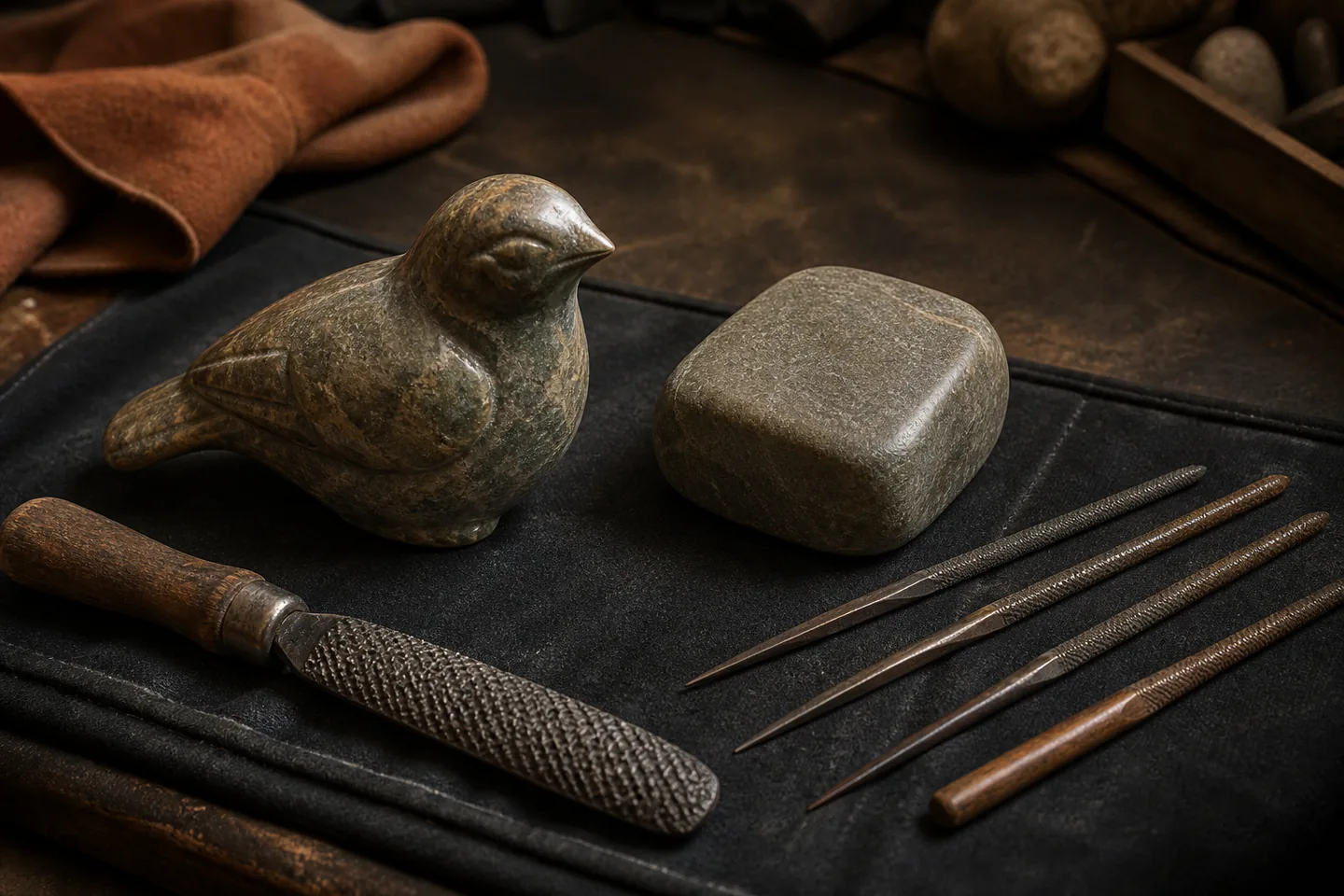
A palm-size rounded soapstone form
Begin with soft stone and hand tools, not a grinder.
Start with a small soapstone or alabaster blank, hand rasps and a simple rounded form. Slow subtractive work teaches grain, support and surface without bringing powered silica-producing tools into a home.
Quick answer
Shape one soft-stone form with rasp and file outdoors
Choose a small documented carving-grade soapstone or alabaster blank with no hidden fractures. Sketch a rounded animal or abstract form on all faces, wrap the piece on a stable bench and remove corners gradually with a hand rasp while keeping the other hand outside the tool path. Work outdoors or under a competent dust-control plan, never dry-grind the stone, and use eye protection. Refine with files and only wet-finish if the supplier confirms that method for the exact stone.
- 01
“Stone” is not one material. Soapstone, alabaster, limestone and hard silicate-rich rocks need different tools and dust controls.
- 02
A hand-tool soft-stone route is slower but gives feedback before irreversible powered cutting.
- 03
Do not assume a disposable mask supplied in a craft kit is adequate respiratory protection; assess the stone, dust and fit.
- 04
Support the whole piece. A vice can bruise soft stone and a lap is not a safe workholding system.
What to expect
What the first stone carving result really teaches
Carving is a sequence of irreversible choices. The first success is not polish; it is keeping the form readable while removing less than expected.
Material
Confirm the stone species and supplier advice. Unknown found stone may fracture or contain hazardous minerals.
Plan
Draw front, side and top views so one face is not finished while the others remain square.
Support
Use padding and a bench stop that resists movement without crushing the work.
Tool
Let rasp teeth cut on controlled strokes; forcing or twisting increases slips and chips.
Dust
Keep dust from becoming airborne and away from living areas, clothes and drains.
Finish
A progressively refined surface reveals scratches; polish and oil only with documented compatible products.
Core method
Build one repeatable stone carving workflow
Choose a safe small blank
Buy stone sold for hand carving from a source that identifies it. Inspect for cracks, draw a centre line and mark the silhouette on several faces. Keep the proposed form thick, with no narrow legs, wings or handles that can snap during roughing.
Secure and rough the volume
Work on a stable outdoor or workshop bench with padded non-slip support. Wear eye protection and use the largest appropriate hand rasp to remove corners in short controlled strokes. Turn the work often and compare it with all three drawings rather than completing one side.
Refine planes into curves
Switch to smaller files after the silhouette is correct. Work across earlier scratches, feel for high spots with clean fingers or side lighting and preserve extra material around fragile transitions. Do not chase a polished patch while major asymmetry remains.
Finish under material guidance
Use the grit sequence, wet method and finish recommended for the identified stone. Capture slurry and residue rather than washing it into drains. Let the piece dry fully, inspect for remaining coarse scratches and apply oil or wax only if the supplier documents it.
Useful products
Products with a clear job in the setup
The Sculpture House kit is a compact soft-stone route; Draper files provide a broader later shaping range; the 3M glasses solve eye protection only. The kit’s supplied mask does not replace a respiratory risk assessment.
Sculpture House Soapstone Carving Starter Kit
It avoids the need to source unknown rock and starts with manageable hand shaping.
Draper Draper Redline 16-Piece File Set 68904
Different profiles can reach concave and convex areas without powered grinding.
3M SecureFit 200 Safety Glasses
Recognised safety eyewear is more dependable than decorative glasses or ordinary spectacles.
First project
Carve a rounded abstract bird
A thick silhouette with no thin projections teaches every main stage while resisting beginner breakage.
- 01
Identify and inspect the blank
Reject unknown, badly cracked or unsuitable stone.
- 02
Draw three views
Mark centre, base and the thickest protected areas.
- 03
Secure on padding
Keep hands behind the rasp and the work off the lap.
- 04
Remove corners gradually
Alternate faces and preserve extra material around the neck.
- 05
File the final curves
Cross earlier scratches and check under side light.
- 06
Finish and contain residue
Follow the stone supplier’s wet or dry method and local disposal guidance.
What can wait
What can wait until the first result
Hard rock, power tools and fine projections turn a gentle hand craft into a higher-control workshop process.
- 01
An angle grinder
It creates speed, noise, kickback and high dust exposure before basic form control exists.
- 02
Unknown garden stone
Composition and internal flaws are uncertain and some rock dust presents serious respiratory hazards.
- 03
A delicate figure
Thin limbs and undercuts break easily and require specialised supports and tools.
- 04
Mirror polish
Refine the form and remove coarse scratches before buying compounds or chasing gloss.
- 05
Indoor dry sanding
It spreads fine mineral dust through the home and is not a reasonable beginner shortcut.
Upgrade path
Upgrade the repeated limitation
Upgrade material hardness, holding and tool power only in a workspace designed for the new hazard.
Soft-stone hand start
About £45–£90Small kit + eye protection + controlled bench
Learn form, support and files.Better hand shaping
About £30–£120Quality rasps, rifflers and padded vice
Reach curves with more control.Studio stone route
About £100–£500Class + supplied stone and pneumatic/power access
Learn dust extraction and heavier roughing.Dedicated workshop
About £800–£5,000+Engineered extraction, tools and handling equipment
Work larger and harder under formal controls.Safety & care
Stone dust and moving tools deserve workshop controls
Silica-containing dust can cause permanent lung disease. Unknown materials, dry power cutting and indoor dust are outside this home starter route.
- Identify the stone and review supplier safety information before cutting, sanding or applying finishes.
- Use suitable eye protection and stable padded workholding; keep hands and body out of every file, knife and chisel path.
- Do not dry-cut, grind or sand silica-bearing or unknown stone at home; use professional extraction, wet methods and respiratory controls based on a proper assessment.
- Contain chips, slurry and dusty clothing, clean with methods that do not re-aerosolise particles and follow local disposal rules.
- Stop for cracks, tool damage, numbness, pain or loss of control; powered or percussive tools deserve competent in-person training.
Outside help
When outside help earns its place
A soft-stone kit can demonstrate the pace, but a class is the right next step before chisels, grinders, hard stone or large work. Ask specifically how dust, tool guarding and lifting are controlled.
Use sources that identify the stone and show stable workholding.
Check stone, tools, extraction, PPE and group size.
Representative UK product, workshop, lesson and club costs checked 13 August 2026; local prices, access, materials and tutor support vary.
Sources
Where the guidance came from
UK health guidance defines mineral-dust control; carving suppliers, sculptors and communities add material, hand-tool and finishing experience.
-
01
HSE · Stoneworking and silica
UK health guidance on stone dust and controls.
Open source -
02
COSHH Essentials · Silica
Task-specific crystalline silica control guidance.
Open source -
03
Sculpture House · Stone carving
Specialist stone, tool and kit context.
Open source -
04
Stone Carving Association
Carver education and workshop practice.
Open source -
05
Reddit · r/Stonecarving
Community material, tool and beginner-project discussion.
Open source -
06
Amazon UK · Sculpture House stone carving kit
Exact product page, model or ISBN, observed price and availability checked for this guide.
Open source -
07
Amazon UK · Draper Redline file set
Exact product page, model or ISBN, observed price and availability checked for this guide.
Open source -
08
Amazon UK · 3M SecureFit 200 glasses
Exact product page, model or ISBN, observed price and availability checked for this guide.
Open source
Guide information and links checked 13 August 2026.