Beginner’s guide · Make & create
Secure the hook in the vise,
then use fewer turns than you expect.
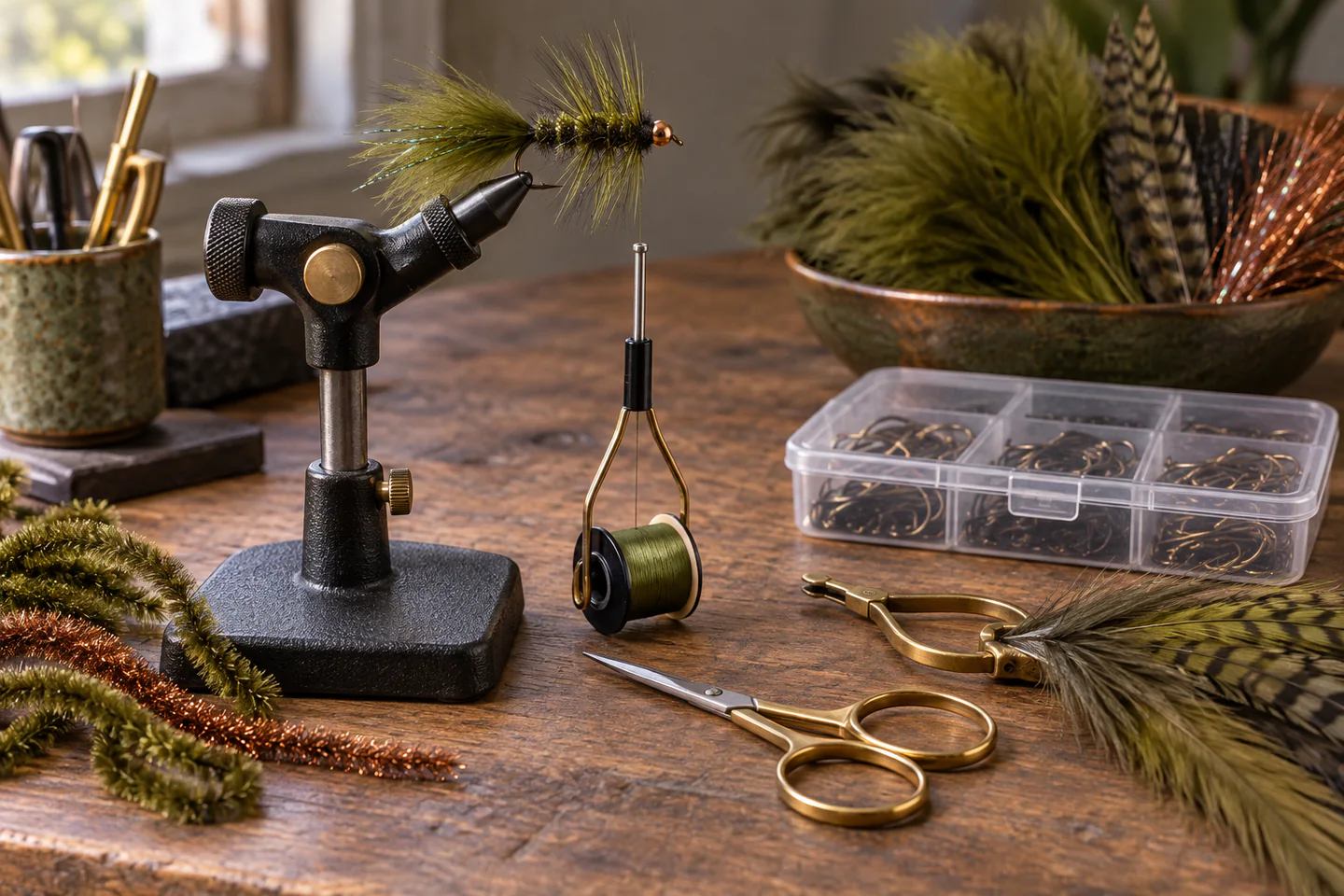
Fly tying builds fishing flies from thread and selected materials. Start with one robust pattern and learn proportion, thread control and safe hook handling.
Quick answer
Complete one three simple black and olive practice flies before expanding the setup
Choose a vise that holds the intended hook range securely, a bobbin that feeds smooth thread and materials for one established pattern. Debarb or cover the practice hook where appropriate, start thread behind the eye, build a controlled base, tie each material with minimal firm wraps and preserve space for the finishing knot. Compare three flies rather than decorating one heavily.
- 01
The vise must grip the hook without movement while leaving safe access to the shank. For a first fly tying attempt, keep the materials, measurements and sequence written beside the work. Photograph or measure the result before correcting it, because a visible record separates a technique problem from a material or setup problem.
- 02
Thread wraps create bulk quickly; placement and tension matter more than extra turns. For a first fly tying attempt, keep the materials, measurements and sequence written beside the work. Photograph or measure the result before correcting it, because a visible record separates a technique problem from a material or setup problem.
- 03
Pattern proportions are measured against the hook, not guessed from a large finished photograph. For a first fly tying attempt, keep the materials, measurements and sequence written beside the work. Photograph or measure the result before correcting it, because a visible record separates a technique problem from a material or setup problem.
- 04
Local fishing rules, hook restrictions and invasive-material rules apply before any fly is used. For a first fly tying attempt, keep the materials, measurements and sequence written beside the work. Photograph or measure the result before correcting it, because a visible record separates a technique problem from a material or setup problem.
What to expect
What fly tying is really like at the start
The useful beginner controls are setup, repeatable movement and a finished sample. Using thread tension without crowding the hook eye is the main skill to observe before adding scale or decoration.
Hook
Points and barbs catch skin, clothing and eyes even before the fly reaches water. For a first fly tying attempt, keep the materials, measurements and sequence written beside the work. Photograph or measure the result before correcting it, because a visible record separates a technique problem from a material or setup problem.
Thread
Too much tension breaks fine thread, while too little lets materials rotate. For a first fly tying attempt, keep the materials, measurements and sequence written beside the work. Photograph or measure the result before correcting it, because a visible record separates a technique problem from a material or setup problem.
Proportion
Overlong tails and crowded heads change both appearance and fishing behaviour. For a first fly tying attempt, keep the materials, measurements and sequence written beside the work. Photograph or measure the result before correcting it, because a visible record separates a technique problem from a material or setup problem.
Materials
Natural feathers and furs need lawful, clean provenance and pest-safe storage. For a first fly tying attempt, keep the materials, measurements and sequence written beside the work. Photograph or measure the result before correcting it, because a visible record separates a technique problem from a material or setup problem.
Core method
The core fly tying method
Set a safe tying station
Use a stable vise, bright light and a closed tray that accounts for every hook. For a first fly tying attempt, keep the materials, measurements and sequence written beside the work. Photograph or measure the result before correcting it, because a visible record separates a technique problem from a material or setup problem.
Build a flat thread base
Start behind the eye, touch turns without piling and practise stopping at measured points. For a first fly tying attempt, keep the materials, measurements and sequence written beside the work. Photograph or measure the result before correcting it, because a visible record separates a technique problem from a material or setup problem.
Tie one material at a time
Measure against the hook, bind with minimal wraps and trim only after it is secure. For a first fly tying attempt, keep the materials, measurements and sequence written beside the work. Photograph or measure the result before correcting it, because a visible record separates a technique problem from a material or setup problem.
Whip-finish and compare
Leave a clear eye, complete a durable knot and line up three attempts for diagnosis. For a first fly tying attempt, keep the materials, measurements and sequence written beside the work. Photograph or measure the result before correcting it, because a visible record separates a technique problem from a material or setup problem.
Useful products
Products with a clear job in the route
These two products cover distinct jobs in the beginner route; they are not a requirement to buy a bundle. Use materials already owned when they meet the same specification, and confirm every live listing before ordering.
LIHAO 10-Piece Basic Model Building Tool Set
Several controlled tools are better than improvising with household blades.
3M SecureFit 200 Safety Glasses
They are easy to keep at the bench for hooks, wire, needles and brittle materials.
First project
Make three simple black and olive practice flies
Keep the project small enough to finish, inspect and repeat. The first result is evidence about material compatibility, sequence and control rather than a performance test.
- 01
Prepare the workspace and materials
Use a stable vise, bright light and a closed tray that accounts for every hook. For a first fly tying attempt, keep the materials, measurements and sequence written beside the work. Photograph or measure the result before correcting it, because a visible record separates a technique problem from a material or setup problem.
- 02
Make the first controlled pass
Start behind the eye, touch turns without piling and practise stopping at measured points. For a first fly tying attempt, keep the materials, measurements and sequence written beside the work. Photograph or measure the result before correcting it, because a visible record separates a technique problem from a material or setup problem.
- 03
Check the central technique
Measure against the hook, bind with minimal wraps and trim only after it is secure. For a first fly tying attempt, keep the materials, measurements and sequence written beside the work. Photograph or measure the result before correcting it, because a visible record separates a technique problem from a material or setup problem.
- 04
Complete the structure
Leave a clear eye, complete a durable knot and line up three attempts for diagnosis. For a first fly tying attempt, keep the materials, measurements and sequence written beside the work. Photograph or measure the result before correcting it, because a visible record separates a technique problem from a material or setup problem.
- 05
Finish, measure and record
Let the work settle or dry by the relevant material instructions, then measure, photograph and label the result. Record the one change that would make the next fly tying attempt more controlled. For a first fly tying attempt, keep the materials, measurements and sequence written beside the work. Photograph or measure the result before correcting it, because a visible record separates a technique problem from a material or setup problem.
What can wait
What can wait until the first result
Delay anything that adds cost, risk or another variable before the basic workflow has produced something you can review.
- 01
Huge material assortment
One pattern teaches more than sorting anonymous feathers. For a first fly tying attempt, keep the materials, measurements and sequence written beside the work. Photograph or measure the result before correcting it, because a visible record separates a technique problem from a material or setup problem.
- 02
Tiny dry flies
Fine hooks and sparse proportion leave little tolerance. For a first fly tying attempt, keep the materials, measurements and sequence written beside the work. Photograph or measure the result before correcting it, because a visible record separates a technique problem from a material or setup problem.
- 03
Epoxy heads
Adhesive chemistry is unnecessary for the first thread finish. For a first fly tying attempt, keep the materials, measurements and sequence written beside the work. Photograph or measure the result before correcting it, because a visible record separates a technique problem from a material or setup problem.
- 04
Fishing immediately
Casting access, licences, rules and fish welfare are separate responsibilities. For a first fly tying attempt, keep the materials, measurements and sequence written beside the work. Photograph or measure the result before correcting it, because a visible record separates a technique problem from a material or setup problem.
Upgrade path
Add the capability you can now name
Each stage should remove a demonstrated limitation rather than make the setup look more advanced.
Three practice flies
Use owned tools where possibleOne small sample and written notes
Learn the central movement and material behaviour.Small pattern box
About £20–£80A repeatable complete starter setup
Repeat the result with cleaner finish and fewer corrections.Local hatch matching
About £50–£180A selected tool or structured class
Add one technique, size or design capability.Advanced presentation flies
Cost varies widelyA documented specialist workflow
Develop original work with provenance, testing and appropriate safety.Safety & care
Safety, care and respectful practice in fly tying
The practical risks are manageable when tools, materials and cultural claims remain specific and proportionate.
- Wear eye protection and keep the hook point covered whenever practical. For a first fly tying attempt, keep the materials, measurements and sequence written beside the work. Photograph or measure the result before correcting it, because a visible record separates a technique problem from a material or setup problem.
- Count hooks before and after every session and store them in closed compartments. For a first fly tying attempt, keep the materials, measurements and sequence written beside the work. Photograph or measure the result before correcting it, because a visible record separates a technique problem from a material or setup problem.
- Use scissors and bodkins away from the face and supporting fingers. For a first fly tying attempt, keep the materials, measurements and sequence written beside the work. Photograph or measure the result before correcting it, because a visible record separates a technique problem from a material or setup problem.
- Check wildlife law and provenance before buying feathers, fur or protected-species material. For a first fly tying attempt, keep the materials, measurements and sequence written beside the work. Photograph or measure the result before correcting it, because a visible record separates a technique problem from a material or setup problem.
- Follow local angling rules, biosecurity and fish-welfare guidance before using a fly. For a first fly tying attempt, keep the materials, measurements and sequence written beside the work. Photograph or measure the result before correcting it, because a visible record separates a technique problem from a material or setup problem.
Outside help
When outside help earns its place
A guided session is useful when equipment setup, live hand correction, heat, sharp tools or a specialist press blocks safe progress. A clear source is enough for the smallest fly tying sample.
Choose one coherent lesson that covers preparation, the central fly tying technique, finishing and common mistakes.
Ask which tools and materials are included, whether the project can be finished in the session and what safety induction is provided.
Representative UK learning and access routes checked 20 September 2026; local prices, equipment and tutor support vary.
Sources
Where the guidance came from
Authoritative and specialist guidance supports the method, terminology and safety boundaries; community discussion contributes recurring beginner problems rather than unsupported claims.
-
01
Fly Dressers’ Guild
UK fly-dressing education, branches and technique context.
Open source -
02
Angling Trust · Freshwater fishing
UK angling participation, rules and fish-welfare context.
Open source -
03
GOV.UK · Fishing licences
Current England and Wales rod-licence requirements.
Open source -
04
Veniard
Established UK fly-tying materials and tool context.
Open source -
05
Fulling Mill · Fly tying
UK materials, hooks and pattern context.
Open source -
06
Reddit · r/flytying
Recurring beginner evidence on vises, proportions and first patterns.
Open source -
07
Amazon UK · 10-Piece Basic Model Building Tool Set
Exact Amazon UK catalogue page or ISBN used for the recommendation; confirm current price, seller, specification and availability.
Open source -
08
Amazon UK · SecureFit 200 Safety Glasses
Exact Amazon UK catalogue page or ISBN used for the recommendation; confirm current price, seller, specification and availability.
Open source
Guide information and links checked 20 September 2026.