Beginner’s guide · Grow & care
Check the load,
then grow one useful pot.
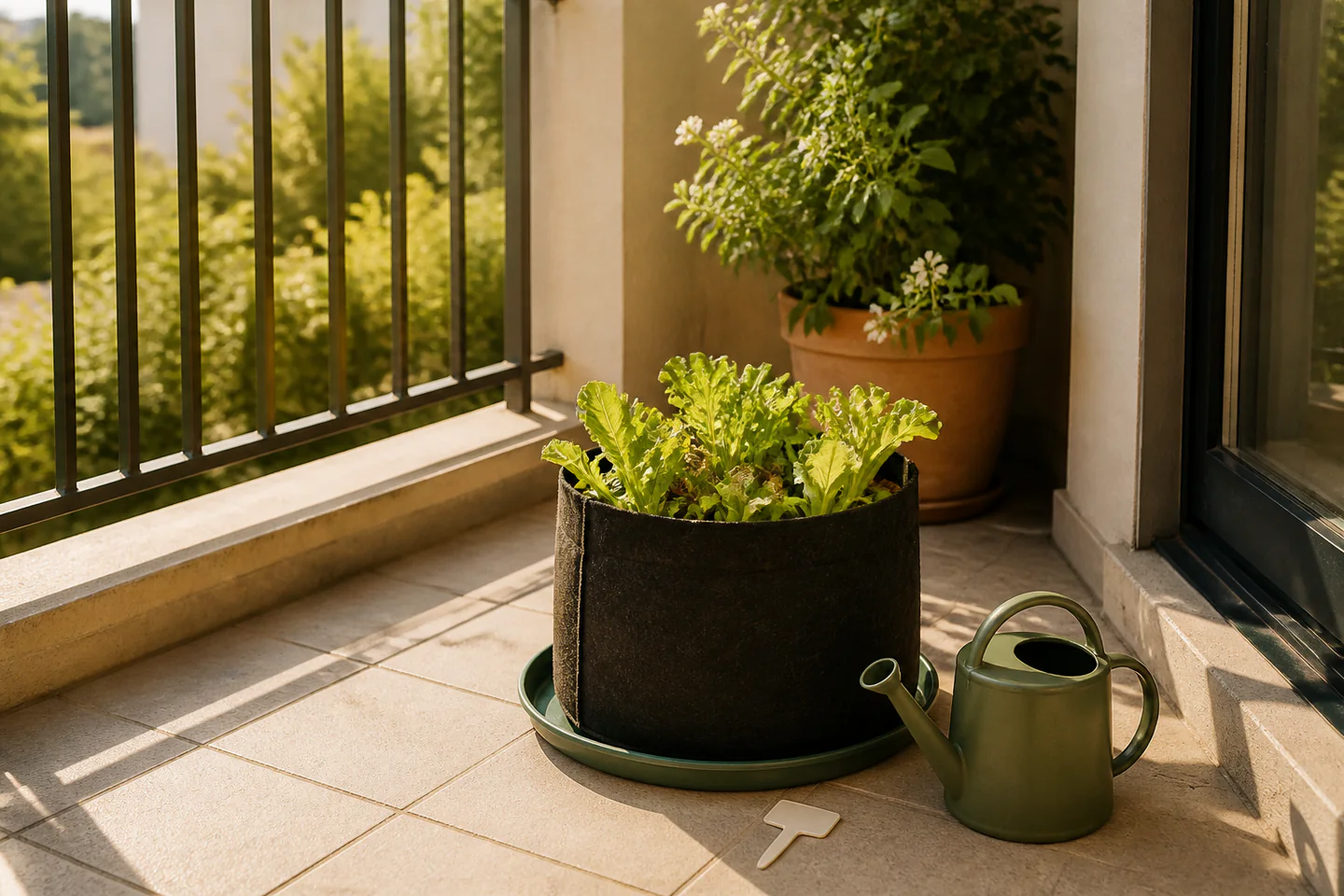
A balcony garden begins with permission, safe loading, wind and drainage. Start with one floor-standing container of herbs or compact salad leaves.
Quick answer
Confirm permission and load before buying a container
Read the tenancy, lease and building rules and ask the responsible owner or manager about planters, loading, drainage and attachments. Choose one modest floor-standing container placed away from edges and exits, fill it with suitable peat-free compost and grow one compact crop matched to the available sun. Water slowly into a saucer or controlled drainage system and prevent runoff reaching neighbours or the building.
- 01
Choose one modest floor-standing container and compact crop for the first result and resist substituting several unfamiliar materials at once. Record what you used on the first attempt so the result can be repeated or changed for a reason.
- 02
Make load, wind, sun and controlled drainage visible with a small test before committing the full project. Record what you used on the first attempt so the result can be repeated or changed for a reason.
- 03
Change one variable between attempts and keep the preparation otherwise consistent. Record what you used on the first attempt so the result can be repeated or changed for a reason.
- 04
Inspect the work at each reversible stage instead of waiting until a harvest without obstructing access. Record what you used on the first attempt so the result can be repeated or changed for a reason.
- 05
Finish one modest result and note the actual time, material use and recurring difficulty. Record what you used on the first attempt so the result can be repeated or changed for a reason.
What to expect
The building conditions come before the plant list
Balconies intensify wind, heat and drying while introducing structural, falling-object and water-runoff responsibilities absent from a ground-level bed.
Permission
Rules may restrict drilling, rail planters, visible structures and water runoff. In balcony gardening, this is worth checking deliberately rather than trying to correct it after the next stage.
Load
Wet compost is much heavier than dry bagged material. Spread modest loads and obtain building advice when uncertain. In balcony gardening, this is worth checking deliberately rather than trying to correct it after the next stage.
Wind
Tall plants and loose pots can topple or become falling hazards. Keep the first crop low. In balcony gardening, this is worth checking deliberately rather than trying to correct it after the next stage.
Sun
Reflected walls can scorch leaves and containers even when the compass direction seems suitable. In balcony gardening, this is worth checking deliberately rather than trying to correct it after the next stage.
Water
Small pots dry quickly, yet runoff must not stain façades or reach people below. In balcony gardening, this is worth checking deliberately rather than trying to correct it after the next stage.
Core method
Design around the balcony, not a shopping list
Confirm constraints
Document permission, safe loading, drainage route, wind exposure, sun hours and emergency access. In balcony gardening, this is worth checking deliberately rather than trying to correct it after the next stage.
Choose a low stable pot
Use a floor-standing container with drainage and a saucer or tray suitable for the surface. In balcony gardening, this is worth checking deliberately rather than trying to correct it after the next stage.
Plant one compact crop
Use fresh suitable compost, leave watering room and follow seed or plant spacing. In balcony gardening, this is worth checking deliberately rather than trying to correct it after the next stage.
Observe daily in hot weather
Check moisture, wind and runoff, harvest regularly and secure or move the pot before severe weather. In balcony gardening, this is worth checking deliberately rather than trying to correct it after the next stage.
Useful products
Products with a clear job in the setup
GardenMate grow bags are lightweight containers when placed safely on the floor. Miracle-Gro peat-free compost supplies a named growing medium, and the Haws can provides controlled watering.
GardenMate Five 30-Litre Fabric Grow Bags
A single bag can test the space while unused bags store flat.
Miracle-Gro Peat-Free Premium All-Purpose Compost
A named peat-free compost avoids reusing unknown garden soil in a container.
Haws Bartley Burbler Indoor Watering Can
The small volume encourages measured trips and is easier to carry through the home.
First project
Grow one pot of cut-and-come-again leaves
Low salad leaves provide a short cycle and tolerate harvesting without a tall trellis or heavy permanent planter.
- 01
Confirm written constraints
Check permission, load, runoff and attachment rules. In balcony gardening, this is worth checking deliberately rather than trying to correct it after the next stage.
- 02
Measure sun and wind
Observe several days rather than relying only on direction. In balcony gardening, this is worth checking deliberately rather than trying to correct it after the next stage.
- 03
Place the empty container
Keep it on the floor, clear of edges, drains and escape routes. In balcony gardening, this is worth checking deliberately rather than trying to correct it after the next stage.
- 04
Fill and sow modestly
Use suitable compost and seed spacing, then label date and variety. In balcony gardening, this is worth checking deliberately rather than trying to correct it after the next stage.
- 05
Water without runoff
Apply slowly, catch drainage and check again during hot or windy weather. In balcony gardening, this is worth checking deliberately rather than trying to correct it after the next stage.
- 06
Harvest and review
Cut leaves as directed and record whether pot volume and position were manageable. In balcony gardening, this is worth checking deliberately rather than trying to correct it after the next stage.
What can wait
What can wait until the first result
Permanent structures and heavy planters require better evidence than one successful lightweight crop.
- 01
Rail-hanging planter
Falling objects and attachment rules make it a poor default recommendation. In balcony gardening, this is worth checking deliberately rather than trying to correct it after the next stage.
- 02
Large ceramic trough
Wet weight and breakage are significant. In balcony gardening, this is worth checking deliberately rather than trying to correct it after the next stage.
- 03
Tall fruit tree
Wind loading, root volume and long-term weight need specialist planning. In balcony gardening, this is worth checking deliberately rather than trying to correct it after the next stage.
- 04
Automatic hose system
Leaks and unattended runoff can affect the building and neighbours. In balcony gardening, this is worth checking deliberately rather than trying to correct it after the next stage.
- 05
Large compost store
Weight, pests and access may conflict with balcony rules. In balcony gardening, this is worth checking deliberately rather than trying to correct it after the next stage.
Upgrade path
Upgrade the repeated limitation
Expand only when water, wind and access remain manageable through changing weather.
One herb pot
About £20–£50Floor container and watering can
Learn the microclimate.Three compatible crops
About £40–£100Several modest pots and trays
Plan watering and harvest.Seasonal edible balcony
About £80–£250Approved supports and storage
Use vertical space safely.Permanent scheme
About £200–£800+Professional load advice and irrigation controls
Manage structure and long-term care.Safety & care
Falling objects, wet weight and exits are the non-negotiable risks
A balcony is part of a building. Gardening choices must preserve structural safety, fire access, neighbours and waterproofing.
- Obtain required permission and professional load advice rather than guessing from balcony appearance. Follow the current instructions supplied with the exact material, tool or living specimen.
- Keep every pot, tool and watering can away from edges and secure items for forecast high winds. Follow the current instructions supplied with the exact material, tool or living specimen.
- Do not obstruct doors, drains, escape routes, fire equipment or maintenance access. Follow the current instructions supplied with the exact material, tool or living specimen.
- Catch runoff and prevent soil, fertiliser or chemicals reaching neighbours and public areas. Follow the current instructions supplied with the exact material, tool or living specimen.
- Lift wet compost with help, divide loads and keep water away from indoor electrics. Follow the current instructions supplied with the exact material, tool or living specimen.
Outside help
When outside help earns its place
A complete beginner tutorial is enough for the first controlled attempt. A class becomes useful when load planning, fixed supports or a full seasonal scheme becomes the goal.
Follow one method using one modest floor-standing container and compact crop, including preparation and finishing rather than only the photogenic middle stage.
Check whether materials, troubleshooting, a harvest without obstructing access and a finished take-home result are included.
Representative UK learning options checked 28 August 2026; local prices, access, materials and tutor support vary.
Sources
Where the guidance came from
The method is grounded in specialist and public guidance, then checked against recurring beginner questions and the exact products linked here.
-
01
Royal Horticultural Society · houseplants
UK houseplant care and problem guidance.
Open source -
02
Royal Horticultural Society · containers
Container-growing fundamentals.
Open source -
03
Royal Horticultural Society · greenhouses
Greenhouse siting, growing and care.
Open source -
04
UK Centre for Ecology & Hydrology · invasive species
Environmental context for responsible plant disposal.
Open source -
05
Reddit · r/houseplants
Community evidence on light, watering, pests and beginner errors.
Open source -
06
Amazon UK · Five 30-Litre Fabric Grow Bags
Exact product catalogue page or ISBN used for the recommendation; current price, seller, specification and availability should be confirmed.
Open source -
07
Amazon UK · Peat-Free Premium All-Purpose Compost
Exact product catalogue page or ISBN used for the recommendation; current price, seller, specification and availability should be confirmed.
Open source -
08
Amazon UK · Bartley Burbler Indoor Watering Can
Exact product catalogue page or ISBN used for the recommendation; current price, seller, specification and availability should be confirmed.
Open source
Guide information and links checked 28 August 2026.