Beginner’s guide · Make & build
A small batch of evenly rounded glossy stones
Let each abrasive stage finish its own job.
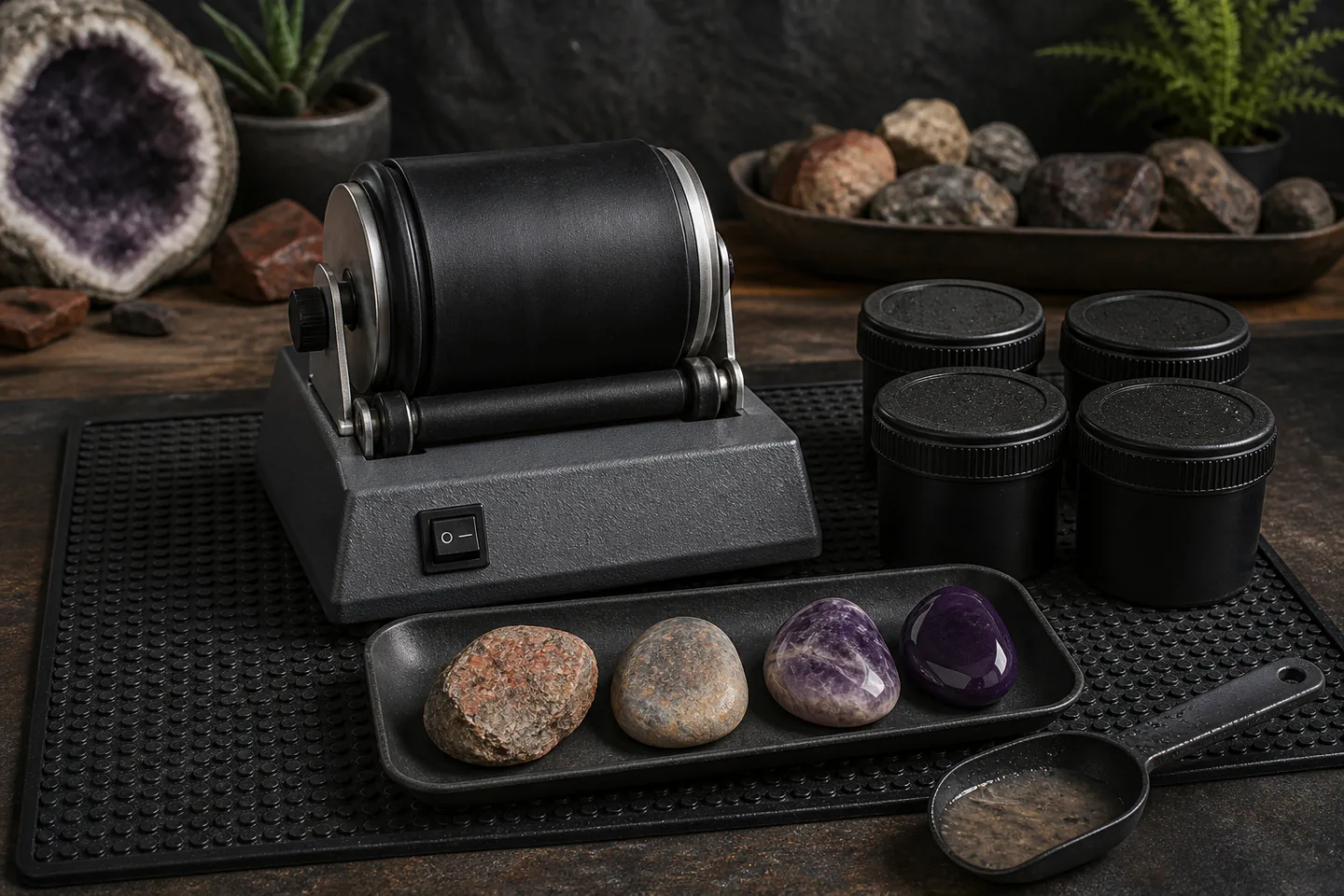
Start with one rotary tumbler, a compatible barrel load and mixed stones of similar hardness. Run coarse, medium, pre-polish and polish without washing slurry down a drain.
Quick answer
Expect several weeks, not one weekend
Use a rotary tumbler with the maker’s barrel capacity, fill it roughly three-quarters with compatible rough and ceramic or plastic media as directed, then add the specified coarse grit and water. Run for about a week, check progress, rinse outdoors into a settling container and scrub barrel, lid and stones before the next abrasive stage. Repeat through medium, pre-polish and a real polish, extending stages when scratches remain.
- 01
Rotary tumbling normally takes four or more week-long stages; hard or difficult material can take longer and repeat coarse grinding.
- 02
Mix rocks of similar Mohs hardness and inspect for cracks, pits and crumbly pieces that can carry grit forward.
- 03
Slurry contains fine rock and abrasive that can set in household plumbing. Never pour it into a sink, toilet or storm drain.
- 04
A kit labelled “polish” may include a final fine abrasive that does not give every rock a mirror finish; material and cleanliness matter.
What to expect
The machine runs continuously while progress remains slow
The hobby is mostly loading, listening, weekly inspection and meticulous cleaning. The dramatic shine appears only after earlier scratches are genuinely removed.
Noise
A barrel rolling stone is audible day and night; use a safe ventilated location, not an airtight insulated box.
Load
Too empty creates impacts and bruising; too full reduces movement. Follow the exact barrel and media guidance.
Hardness
Soft, porous and hard rocks in one batch wear differently and can contaminate or damage one another.
Coarse stage
This creates the shape and removes pits; later fine grit cannot repair a deep crack left behind.
Cleaning
One coarse grain in pre-polish can scratch the whole load. Clean barrel rim, lid, stones and media meticulously.
Polish
A waxy or dull result can reflect unsuitable rock, contaminated stages, poor final media or a need for burnishing—not simply too little time.
Core method
Control the barrel load and the boundary between stages
Sort suitable rough
Choose solid non-porous stones of broadly similar hardness in several sizes. Reject pieces with deep fractures, soft matrix, crumbly edges or cavities likely to trap abrasive. Wash and photograph the starting batch. If the source or mineral identity is uncertain, test a small sacrificial load rather than mixing it with valued material.
Load to the maker’s specification
Weigh or measure the rock and media, then fill to the recommended fraction. Add only the grit quantity and water level stated for that barrel and material. Clean the sealing surfaces, close the barrel and check for leaks. Listen after the first minutes: sliding or hammering can indicate an unsuitable load.
Judge completion, not the calendar
After the coarse run, open over a washable contained area and inspect shape, pits and fractures. Remove broken pieces and repeat coarse grinding when the surfaces are not ready. At every transition, dispose of slurry through a settling method allowed locally and scrub every item before adding the next finer abrasive.
Polish and burnish selectively
Use the documented pre-polish and polish media for clean compatible stones. Do not assume one refill kit suits every rock. If the surface is smooth but carries residue, a short burnish with clean media, water and the maker’s recommended soap may help. Dry stones fully before judging final gloss.
Useful products
Products with a clear job in the setup
The National Geographic Hobby kit is the lower-cost complete route. The Professional model offers a larger barrel and speed/timer control but does not shorten the physics of each stage. The refill kit replaces consumable abrasives and media after the supplied batch.
National Geographic Hobby Rock Tumbler Kit
It removes initial barrel and consumable matching and is widely used enough for common problems to be documented.
National Geographic Professional Rock Tumbler Kit
It makes repeat batches and scheduled checks more convenient without claiming to eliminate week-long stages.
National Geographic Rock Tumbler Refill Kit
It supports a second controlled run without buying another machine and keeps stage labels coherent.
First project
Tumble one compatible mixed-size batch
Keep the first load from one supplied or well-identified family so differences in hardness do not obscure the process.
- 01
Inspect and sort
Remove fractured, porous and obviously softer pieces and include a useful size mix.
- 02
Load and seal
Follow barrel fill, grit and water quantities and clean the gasket before closing.
- 03
Run and listen
Keep the tumbler level in a suitable location and investigate leaks or harsh hammering immediately.
- 04
Inspect the coarse result
Rinse into a settling container and repeat coarse if pits and rough edges remain.
- 05
Deep-clean each transition
Scrub barrel, lid, stones and media so no earlier grit reaches a finer stage.
- 06
Polish, dry and record
Judge gloss only when clean and dry and note material, loads and stage durations.
What can wait
What can wait until the first result
More barrels and exotic rough do not help until one clean four-stage process works.
- 01
Mixing mystery beach stones
Different hardness, porosity and legal collection status make a poor controlled first batch.
- 02
Skipping coarse grinding
Fine stages smooth existing surfaces but do not remove deep pits or reshape rough effectively.
- 03
Pouring slurry away with extra water
Dilution does not stop mineral fines and grit settling and hardening inside plumbing.
- 04
An airtight soundproof box
Motors need ventilation; unsafe heat buildup is not a reasonable noise solution.
- 05
Expensive display rough
Use supplied or replaceable material while learning breakage, loading and grit contamination.
Upgrade path
Upgrade the repeated limitation
Upgrade capacity, barrels or polish media only after the current process identifies the constraint.
Hobby kit batch
About £70–£90Small tumbler + supplied rough and grit
Learn four-stage rotary tumbling.Reliable refills
About £20–£35Known grit, polish and media
Repeat the process on selected rough.Larger controlled tumbler
About £130–£180Bigger barrel + timer/speed control
Increase capacity and operating convenience.Separate barrels or vibratory finish
About £100–£350+Dedicated stage equipment
Reduce contamination or speed later smoothing.Safety & care
Control continuous machinery, mineral dust and slurry
The main risks are leaks, electrical exposure, overheated motors, heavy barrels, sharp rough and inhaling dried mineral fines.
- Run the tumbler on a level water-resistant surface with ventilation and clearance, using the power supply and duty cycle stated by the maker.
- Inspect barrel, lid, cable and motor for heat, leaks or damage and stop rather than leaving a fault running unattended.
- Keep all slurry wet, avoid creating or sweeping dry rock dust and use appropriate controls when handling any silica-bearing material.
- Never pour slurry into household or storm drains; settle and dispose of solids according to local rules.
- Research collected-rock legality and possible mineral hazards, wash hands and keep grit, small stones and machinery away from children and pets.
Outside help
When outside help earns its place
A kit manual and careful log are enough for the first batch. A lapidary club becomes useful for identifying rough, improving polish and seeing larger cutting and finishing equipment safely.
Use the exact barrel, grit, water and cleaning guidance supplied with the tumbler.
Ask about rock identification, workshop access, insurance and whether beginners can bring tumbled material for diagnosis.
Representative UK product, club, lesson and venue costs checked 9 August 2026; local prices, access, weather, materials and tutor support vary.
Sources
Where the guidance came from
Manufacturer instructions set operating limits; experienced tumbling communities and lapidary sources explain hardness, contamination and polish diagnosis.
-
01
National Geographic · Rock tumbler support
Manufacturer support and manuals for the selected kits.
Open source -
02
Rock Tumbling Hobby Forum
Long-running specialist discussion of grit stages, materials and polish problems.
Open source -
03
RockTumbler.com · Tumbling guide
Detailed specialist rotary-tumbling method and troubleshooting.
Open source -
04
Mindat · Mineral database
Mineral identity, locality and hardness context.
Open source -
05
Reddit · r/RockTumbling
Recurring user reports on kit media, slurry, batches and final polish.
Open source -
06
Amazon UK · National Geographic Hobby rock tumbler
Exact product page, model or ISBN, observed price and availability checked for this guide.
Open source -
07
Amazon UK · National Geographic Professional rock tumbler
Exact product page, model or ISBN, observed price and availability checked for this guide.
Open source -
08
Amazon UK · National Geographic tumbler refill kit
Exact product page, model or ISBN, observed price and availability checked for this guide.
Open source
Guide information and links checked 9 August 2026.