Beginner’s guide · Grow & care
Measure the climate,
vent before adding plants.
A greenhouse changes temperature quickly and still needs daily attention. Begin with a small propagation zone, thermometer and ventilation routine.
Quick answer
Record maximum and minimum temperature before filling the space
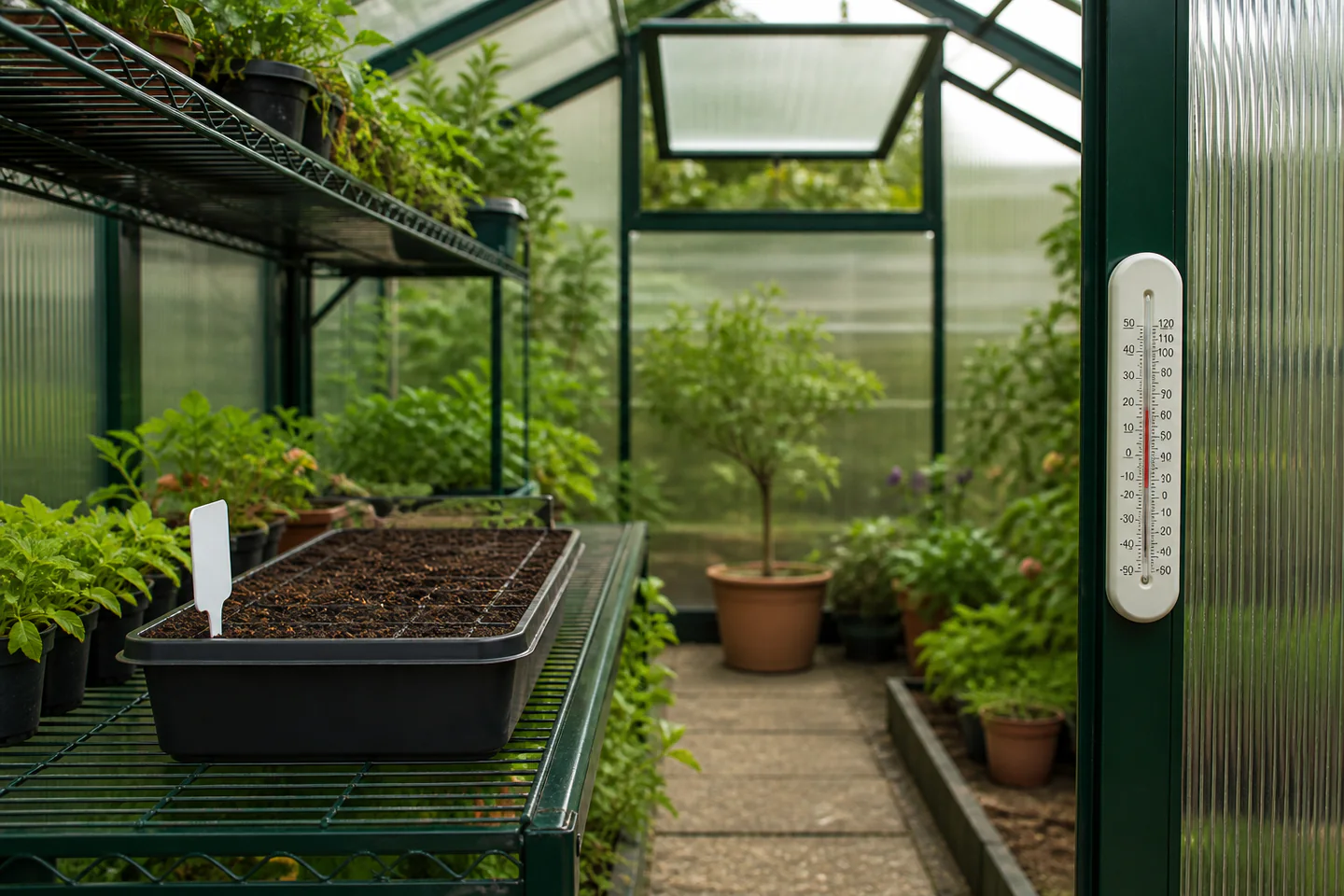
Site and secure a small greenhouse or use an existing sound structure, check that vents and access work and place a maximum-minimum thermometer at plant height out of direct sun. Record conditions empty for several days, then raise one tray of a crop suited to the season. Vent before overheating, water the growing medium rather than the whole structure and inspect daily for pests, damping-off and cold forecasts.
- 01
Choose a sound secured structure and one small crop for the first result and resist substituting several unfamiliar materials at once. Record what you used on the first attempt so the result can be repeated or changed for a reason.
- 02
Make daily temperature, ventilation and moisture records visible with a small test before committing the full project. Record what you used on the first attempt so the result can be repeated or changed for a reason.
- 03
Change one variable between attempts and keep the preparation otherwise consistent. Record what you used on the first attempt so the result can be repeated or changed for a reason.
- 04
Inspect the work at each reversible stage instead of waiting until healthy hardened plants or a modest harvest. Record what you used on the first attempt so the result can be repeated or changed for a reason.
- 05
Finish one modest result and note the actual time, material use and recurring difficulty. Record what you used on the first attempt so the result can be repeated or changed for a reason.
What to expect
Glass or plastic amplifies both opportunity and neglect
Sun can raise temperatures rapidly while clear nights still become cold; the covered space does not automate watering, ventilation or pest control.
Siting
Light, wind exposure, level base, drainage and access determine whether the structure remains useful. In greenhouse gardening, this is worth checking deliberately rather than trying to correct it after the next stage.
Heat
A sunny cool day can still overheat a closed house. Temperature must be measured. In greenhouse gardening, this is worth checking deliberately rather than trying to correct it after the next stage.
Cold
An unheated greenhouse is not frost-proof in every location. Choose crops and timing accordingly. In greenhouse gardening, this is worth checking deliberately rather than trying to correct it after the next stage.
Humidity
Overwatering and closed vents encourage disease even while pots dry unevenly. In greenhouse gardening, this is worth checking deliberately rather than trying to correct it after the next stage.
Pests
Shelter benefits aphids, whitefly and slugs as well as plants. Inspect frequently. In greenhouse gardening, this is worth checking deliberately rather than trying to correct it after the next stage.
Core method
Operate the empty structure before adding complexity
Inspect and secure
Check frame, cover, glazing, anchors, door, vents, shelving and trip hazards. In greenhouse gardening, this is worth checking deliberately rather than trying to correct it after the next stage.
Measure the baseline
Record daily maximum and minimum temperature and note direct-sun periods. In greenhouse gardening, this is worth checking deliberately rather than trying to correct it after the next stage.
Add one tray
Use clean pots and suitable compost, label clearly and avoid filling every shelf. In greenhouse gardening, this is worth checking deliberately rather than trying to correct it after the next stage.
Vent, water and review
Set a daily check, respond to forecasts and keep written records of growth and problems. In greenhouse gardening, this is worth checking deliberately rather than trying to correct it after the next stage.
Useful products
Products with a clear job in the setup
The VonHaus mini greenhouse is a compact test structure, the Brannan thermometer records temperature range, and the ROOT!T mat is only for seeds whose germination temperature needs controlled warmth.
VonHaus Four-Tier Mini Greenhouse
The limited volume encourages a manageable first crop and stores more easily.
Brannan Maximum Minimum Greenhouse Thermometer
Maximum and minimum values make crop and ventilation decisions evidence-based.
ROOT!T ROOT!T Heat Mat
A controlled local mat avoids heating the whole greenhouse.
First project
Raise one tray with a temperature diary
One crop shows whether the daily venting, watering and forecast routine fits real life before the greenhouse fills.
- 01
Secure and clean
Anchor the structure, wash trays and verify door and vents. In greenhouse gardening, this is worth checking deliberately rather than trying to correct it after the next stage.
- 02
Log three empty days
Record maximum, minimum, weather and actions. In greenhouse gardening, this is worth checking deliberately rather than trying to correct it after the next stage.
- 03
Choose a suitable crop
Match the packet’s sowing and temperature guidance to the measured season. In greenhouse gardening, this is worth checking deliberately rather than trying to correct it after the next stage.
- 04
Sow and label one tray
Use fresh medium, clean water and a clear date. In greenhouse gardening, this is worth checking deliberately rather than trying to correct it after the next stage.
- 05
Check morning and afternoon
Vent before heat builds and water only from evidence. In greenhouse gardening, this is worth checking deliberately rather than trying to correct it after the next stage.
- 06
Harden or harvest
Move plants gradually as appropriate and review the diary for next time. In greenhouse gardening, this is worth checking deliberately rather than trying to correct it after the next stage.
What can wait
What can wait until the first result
Heaters, automation and a full crop calendar make sense only after the structure’s natural range and attendance needs are known.
- 01
Fill every shelf
Crowding obstructs airflow and makes watering and inspection harder. In greenhouse gardening, this is worth checking deliberately rather than trying to correct it after the next stage.
- 02
Unattended heater
Fire, electrical and crop risks require an engineered controlled system. In greenhouse gardening, this is worth checking deliberately rather than trying to correct it after the next stage.
- 03
Automatic irrigation
Leaks and blocked emitters can fail unseen. In greenhouse gardening, this is worth checking deliberately rather than trying to correct it after the next stage.
- 04
Tender winter collection
An unheated lightweight structure may not protect it. In greenhouse gardening, this is worth checking deliberately rather than trying to correct it after the next stage.
- 05
Multiple crop regimes
Different heat and humidity needs complicate the first routine. In greenhouse gardening, this is worth checking deliberately rather than trying to correct it after the next stage.
Upgrade path
Upgrade the repeated limitation
Add control because measurements show a repeated limit.
Temperature trial
About £15–£35Thermometer in existing structure
Learn climate swings.Mini greenhouse crop
About £40–£120Secured cover and one tray
Build a daily routine.Season extension
About £100–£350Vent automation and propagation control
Respond to heat and cold.Full greenhouse system
About £500–£5,000+Engineered base, glazing and services
Manage year-round crops.Safety & care
Structures, heat and water need planned safety
Wind can turn lightweight covers into debris, glazing can break and electrical heat must remain separated from irrigation.
- Anchor the structure for the site and close or remove covers according to severe-weather guidance. Follow the current instructions supplied with the exact material, tool or living specimen.
- Inspect glazing, sharp frame edges and unstable shelves before every season. Follow the current instructions supplied with the exact material, tool or living specimen.
- Keep paths and exits clear and store tools below shoulder height. Follow the current instructions supplied with the exact material, tool or living specimen.
- Use outdoor-suitable protected electrical equipment and keep plugs and connections dry. Follow the current instructions supplied with the exact material, tool or living specimen.
- Ventilate before entering an overheated space and store fertilisers and treatments securely. Follow the current instructions supplied with the exact material, tool or living specimen.
Outside help
When outside help earns its place
A complete beginner tutorial is enough for the first controlled attempt. A class becomes useful when structural siting, heating or automated climate control becomes the goal.
Follow one method using a sound secured structure and one small crop, including preparation and finishing rather than only the photogenic middle stage.
Check whether materials, troubleshooting, healthy hardened plants or a modest harvest and a finished take-home result are included.
Representative UK learning options checked 28 August 2026; local prices, access, materials and tutor support vary.
Sources
Where the guidance came from
The method is grounded in specialist and public guidance, then checked against recurring beginner questions and the exact products linked here.
-
01
Royal Horticultural Society · houseplants
UK houseplant care and problem guidance.
Open source -
02
Royal Horticultural Society · containers
Container-growing fundamentals.
Open source -
03
Royal Horticultural Society · greenhouses
Greenhouse siting, growing and care.
Open source -
04
UK Centre for Ecology & Hydrology · invasive species
Environmental context for responsible plant disposal.
Open source -
05
Reddit · r/houseplants
Community evidence on light, watering, pests and beginner errors.
Open source -
06
Amazon UK · Four-Tier Mini Greenhouse
Exact product catalogue page or ISBN used for the recommendation; current price, seller, specification and availability should be confirmed.
Open source -
07
Amazon UK · Maximum Minimum Greenhouse Thermometer
Exact product catalogue page or ISBN used for the recommendation; current price, seller, specification and availability should be confirmed.
Open source -
08
Amazon UK · ROOT!T Heat Mat
Exact product catalogue page or ISBN used for the recommendation; current price, seller, specification and availability should be confirmed.
Open source
Guide information and links checked 28 August 2026.