Beginner’s guide · Cook & bake
Pickle it quickly.
Ferment it deliberately.
Begin with a tested refrigerator pickle for fast feedback, then learn salt-based vegetable fermentation as a separate process. Neither route is automatically shelf-stable, and home canning is a later skill with its own tested recipes.
Quick answer
Choose the process before choosing the jar
For a first evening, make a small refrigerator pickle from a current tested recipe and keep it chilled. When ready to ferment, weigh vegetables and salt, hold everything below the brine and follow a tested vegetable-fermentation method. Do not merge the two instructions.
- 01
Vinegar refrigerator pickles are acidified and chilled; they are not the same as salt-driven fermentation.
- 02
A jar, valve or vacuum does not make food shelf-stable. Canning requires a suitable tested recipe and processing method.
- 03
For fermented vegetables, use the recipe’s salt concentration and keep food submerged under brine.
- 04
When food is slimy, foul-smelling or visibly mouldy—or a tested guide says to discard it—do not taste it.
Choose a route
Three routes that should never blur together
All three can produce a jar of tangy vegetables, but the preservation controls and expectations are different.
Refrigerator pickle
A tested vinegar brine acidifies vegetables quickly. The jar stays refrigerated and is eaten within the recipe’s stated time.
Lacto-ferment
Salt, time and naturally present microorganisms create acidity. Salt ratio, temperature, cleanliness and submersion all matter.
Shelf-stable canned pickle
A tested canning recipe specifies ingredient ratios, jar preparation, headspace and heat processing. It is not a casual extension of either first route.
Taste
Quick pickles taste of vinegar and spices immediately; fermentation develops sourness and aroma over days or weeks.
Feedback
Refrigerator pickles teach slicing, brine and flavour fast. Fermentation adds gas, temperature and microbial judgement.
Core method
Control the variable that preserves each jar
Quick pickle: follow a tested acid ratio
Clean a sound jar, prepare fresh vegetables and use the exact vinegar, water, salt and sugar proportions from a reliable refrigerator-pickle recipe. Cool or apply the brine as instructed, label the date and refrigerate. Never dilute the vinegar beyond the recipe or move the finished jar to a cupboard.
Ferment: weigh rather than improvise
A fermentation recipe may specify salt as a percentage of vegetable weight, a measured brine, or both. Use an accurate scale and the method’s exact calculation. Pack the jar so vegetables remain below brine and use an appropriate food-safe weight. Allow gas to escape through the system the recipe describes.
Canning: start again with a canning recipe
Shelf-stable pickles require validated acidity and heat processing. A clip-top storage jar may be useful for chilled pickles or fermentation, but it is not automatically a tested canning jar. Use current national or university preservation guidance before attempting room-temperature storage.
Starter products
A jar now; a scale and fermentation lid later
The one-litre Kilner clip jar suits a small chilled pickle when used within a tested recipe. The Salter scale becomes important for measured fermentation. The fermentation set adds a weight and valve lid only when the second route begins.
Kilner One-Litre Clip-Top Glass Jar
One litre is large enough to practise packing and brining while keeping the first batch cheap enough to discard if something goes wrong.
Salter 1036 Digital Kitchen Scale
Weighing supports repeatable salt ratios when the second route moves into vegetable fermentation.
First jar
Make one tested refrigerator pickle
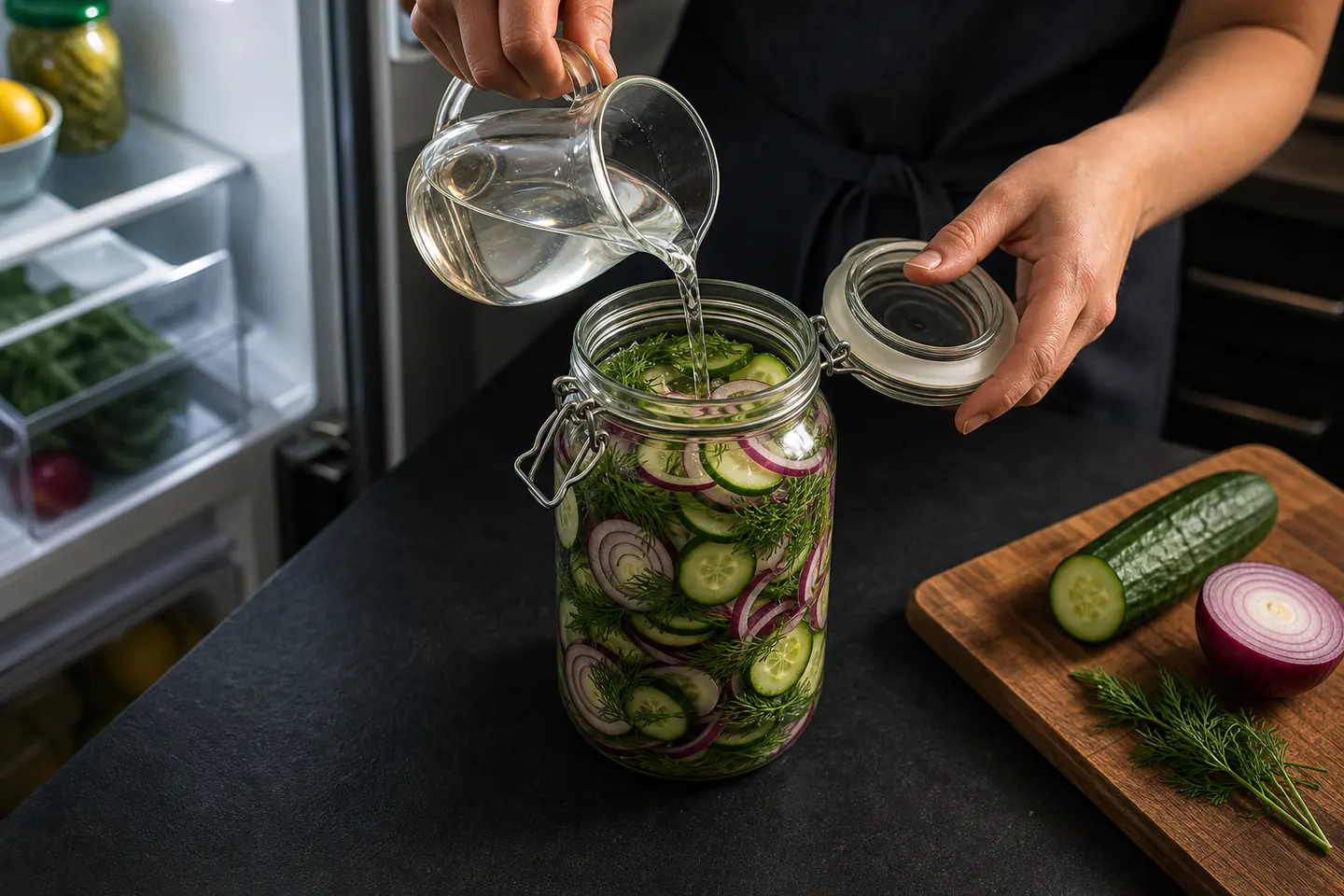
Choose onions, cucumber or another vegetable covered by a reliable refrigerator-pickle recipe. The guide below describes workflow, not a replacement recipe.
- 01
Select a current recipe
Use a university extension or similarly tested source that clearly says refrigerator pickle and gives storage time.
- 02
Inspect and clean
Reject cracked jars and spoiled produce. Wash hands, worktops, utensils and the jar, then follow any heat preparation in the recipe.
- 03
Measure exactly
Use the specified vinegar strength and quantities. Do not reduce vinegar or add extra water to soften the taste.
- 04
Prepare the vegetables
Slice to the recipe’s dimensions so the brine reaches pieces as expected. Pack without crushing.
- 05
Add brine and label
Apply hot or cold brine exactly as directed, remove obvious trapped air if instructed and mark the contents and date.
- 06
Refrigerate
Chill for the stated development time and keep refrigerated throughout. Discard at the recipe’s limit or sooner if spoilage is suspected.
First ferment
Move to fermentation as a new experiment
Start with one vegetable recipe
Sauerkraut or a simple carrot/radish ferment gives clearer learning than a crowded mixed jar. Follow a tested method, weigh the prepared vegetables and calculate salt exactly as it instructs. Record the room temperature and start date.
Keep solids under brine
A food-safe weight helps prevent floating fragments from sitting at the air interface. Leave the headspace the recipe specifies and use an airlock, valve or scheduled venting method designed for fermentation. Put the jar on a tray in case active brine escapes.
Observe without gambling
Bubbles, sour aroma and a cloudy brine can occur in normal vegetable fermentation, while mould, putrid odour, slime or colours identified as unsafe by the tested guide mean discard. Do not rely on tasting an uncertain batch as the safety check.
Skip for now
What can wait
A larger vessel multiplies ingredients and uncertainty. Repeat a small documented batch first.
- 01
The fermentation jar set
Buy it when moving from chilled vinegar pickles to a tested lacto-ferment. Its valve and weights support the process but do not replace salt and temperature control.
- 02
A five-litre crock
Large batches are harder to discard and harder to keep at an even temperature. One litre gives useful feedback with less waste.
- 03
Kombucha and alcohol
They use different cultures, acidity and contamination controls. Treat each as a separate hobby route.
- 04
Shelf-stable canning
This requires tested recipes, suitable jars and correct heat processing. A sealed-looking clip top is not evidence of safety.
- 05
Home pH shortcuts
Meters and strips need correct range, calibration and sampling. They do not turn an improvised recipe into a validated preservation process.
Upgrade path
Add control before volume
The useful progression is from following one recipe to recording a repeatable process.
Refrigerator pickle
About £5–£15 plus foodSound jar + tested vinegar recipe + refrigerator
Learn preparation, brine and flavour with quick feedback.Measured vegetable ferment
About £20–£40Digital scale + one-litre vessel + weight and venting method
Learn salt calculation, submersion, gas and temperature.Repeatable small batches
About £40–£100Matched jars + labels + temperature log + spare weights
Compare one variable at a time and improve consistency.Tested home canning
Equipment dependentCurrent canning guide + approved jars + specified processor
Create shelf-stable products through a separate validated process.Food safety
When uncertain, discard the batch
Preservation changes the conditions around food. Exact recipes, clean handling and correct storage are essential.
- Use current tested recipes; do not alter vinegar strength, vegetable ratios, salt or processing instructions casually.
- Keep refrigerator pickles refrigerated. A closed lid does not make them safe at room temperature.
- For ferments, use food-grade vessels, measured salt and a tested method; keep vegetables submerged as directed.
- Do not ferment or pickle spoiled produce, and keep hands, worktops, utensils, weights and jars clean.
- Discard food with mould, slime, putrid odour, unexpected colour or signs the trusted method identifies as unsafe; do not taste to decide.
- People at increased risk from foodborne illness should seek appropriate medical or food-safety guidance before eating unpasteurised fermented foods.
Classes
When outside help is useful
A good class separates acid pickling, lacto-fermentation and canning, then lets learners practise salt calculation and submersion.
A low-cost seasonal session can introduce basic fruit and vegetable preservation without buying specialist equipment.
Current UK listings in this range typically include ingredients, guided batches and food-safety instruction.
A longer premium class may cover several products, tasting and take-home jars.
Representative UK classes and live prices checked 27 July 2026; always confirm the processes and take-home storage instructions before booking.
Sources
Where the guidance came from
University extension and food-safety sources define the preservation routes. Community discussion informed common questions about salt, weights and beginner batch size.
-
01
University of Minnesota Extension · Fermentation
Tested vegetable-fermentation principles, salt, temperature and spoilage guidance.
Open source -
02
Virginia Tech · Fermenting foods at home
Food-safe equipment, submersion and process controls.
Open source -
03
University of Illinois Extension · Fermenting FAQ
Common safety, salt, brine and spoilage questions.
Open source -
04
University of New Hampshire Extension · Is an old pickle recipe safe?
Why tested recipes and correct vinegar acidity matter for pickles.
Open source -
05
Food Standards Agency · Food hygiene
UK hygiene principles for food preparation and storage.
Open source -
06
r/fermentation · A safe first ferment
Community suggestions for simple first vegetable ferments and small batches.
Open source -
07
r/fermentation · First sauerkraut questions
Recurring practitioner advice on salt, submersion and observing a batch.
Open source -
08
PECT · Preserving workshop
Representative £15 UK community preserving workshop.
Open source -
09
ClassBento UK · Pickling and fermentation classes
Representative current UK class range and availability.
Open source -
10
Borough Kitchen · Fermentation and pickling class
Representative £129 premium cook-school session.
Open source -
11
Amazon UK · Kilner one-litre clip-top jar
Exact one-litre clip jar; £4.40 observed and available.
Open source -
12
Amazon UK · Salter 1036 kitchen scale
Exact digital kitchen scale; £15.00 observed and available.
Open source -
13
Amazon UK · Kilner one-litre fermentation set
Exact valve-lid fermentation jar with weights; £17.30 observed and available.
Open source
Guide information and links checked 27 July 2026.