Beginner’s guide · Grow & care
Give one crop
a useful volume of compost.
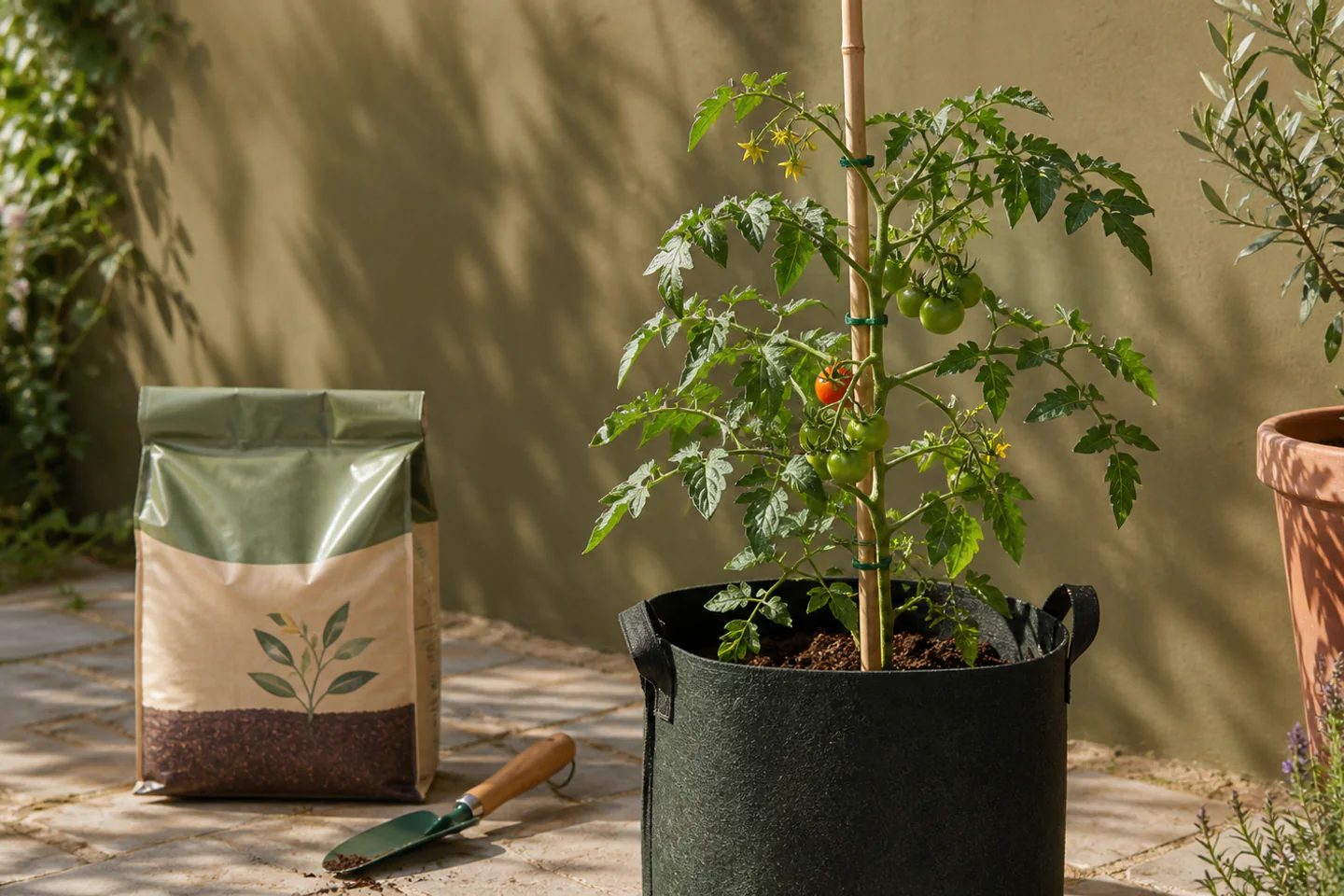
Grow bags make a temporary patio garden possible, but small compost volumes dry quickly. Start with one 30-litre bag and one crop whose mature root and support needs fit the container.
Quick answer
Use one large bag per demanding plant
Fill a 30-litre or larger bag with fresh peat-free vegetable compost in its final sunny position. Plant one tomato, courgette, chilli or similarly suitable crop rather than overcrowding, and install support before roots fill the bag.
- 01
Choose bag volume from the mature crop, not the small transplant in your hand. Record the setting, measurement or observation that mattered so the next attempt can be changed for a reason rather than by guesswork.
- 02
Place and fill the container where it will stay because wet compost is heavy. Record the setting, measurement or observation that mattered so the next attempt can be changed for a reason rather than by guesswork.
- 03
Create real drainage and protect paving or balconies from unsafe runoff. Record the setting, measurement or observation that mattered so the next attempt can be changed for a reason rather than by guesswork.
- 04
Water the complete root volume and increase checks during hot, windy or fruiting periods. Record the setting, measurement or observation that mattered so the next attempt can be changed for a reason rather than by guesswork.
- 05
Feed only according to crop stage, compost charge and the product label. Record the setting, measurement or observation that mattered so the next attempt can be changed for a reason rather than by guesswork.
What to expect
The bag is simple; the water budget is not
Fabric and thin plastic containers can produce well, but they offer less stored water and buffering than open ground.
Volume
A larger bag dries more slowly and supports more roots. Several small bags are not equivalent if each plant remains restricted. In grow-bag gardening, this is worth checking before the next stage because a small adjustment now is easier than undoing a finished result.
Heat and wind
Dark sides and exposed fabric warm or dry quickly. A patio microclimate can demand checks twice daily during extreme weather. In grow-bag gardening, this is worth checking before the next stage because a small adjustment now is easier than undoing a finished result.
Support
Tomatoes and climbing crops need stakes or frames that cannot topple the lightweight container. In grow-bag gardening, this is worth checking before the next stage because a small adjustment now is easier than undoing a finished result.
Feeding
Fresh compost contains a starter nutrient charge. Fruiting crops later need measured feed, while excess fertiliser can damage roots. In grow-bag gardening, this is worth checking before the next stage because a small adjustment now is easier than undoing a finished result.
Core method
Match crop, volume and support before planting
Choose one crop
Read its mature height, root-space, sun and support needs. Avoid combining plants with very different watering demands. In grow-bag gardening, this is worth checking before the next stage because a small adjustment now is easier than undoing a finished result.
Prepare the position
Confirm sun, shelter, drainage and safe load, then place a tray only if it will not hold the roots permanently in water. In grow-bag gardening, this is worth checking before the next stage because a small adjustment now is easier than undoing a finished result.
Fill and plant
Loosen the compost, fill without compacting hard, leave a watering lip and plant at the crop-appropriate depth. In grow-bag gardening, this is worth checking before the next stage because a small adjustment now is easier than undoing a finished result.
Monitor the whole bag
Check moisture at more than one point, water slowly and record feed and harvest so next season’s choice is informed. In grow-bag gardening, this is worth checking before the next stage because a small adjustment now is easier than undoing a finished result.
Useful products
Products with a clear job in the setup
A large bag and known compost form the setup. Feed is a later product for a demanding fruiting crop, not something to add automatically on planting day.
GardenMate Five 30-Litre Fabric Grow Bags
Fabric bags are easy to store and their volume is large enough to teach container watering honestly.
Miracle-Gro Peat-Free Fruit and Vegetable Compost 40 L
A known bagged mix removes the uncertainty of unsuitable garden soil in containers.
Levington Tomorite Concentrated Tomato Food 1 L
A measured concentrate is more repeatable than adding unrecorded homemade mixtures.
First project
Grow one fruiting plant to harvest
One plant makes watering, feeding and support effects easier to read than a crowded mini-allotment.
- 01
Choose the site
Record direct sun, wind and access to water, then put the empty bag where runoff can drain safely. In grow-bag gardening, this is worth checking before the next stage because a small adjustment now is easier than undoing a finished result.
- 02
Fill and pre-water
Add fresh compost, settle it gently and wet the whole volume before planting. In grow-bag gardening, this is worth checking before the next stage because a small adjustment now is easier than undoing a finished result.
- 03
Plant and support
Set one healthy transplant at the recommended depth and add a stable cane or frame immediately. In grow-bag gardening, this is worth checking before the next stage because a small adjustment now is easier than undoing a finished result.
- 04
Check through weather
Inspect morning and evening during heat, watering when the root zone—not only the surface—needs it. In grow-bag gardening, this is worth checking before the next stage because a small adjustment now is easier than undoing a finished result.
- 05
Harvest and review
Pick at the right stage, total the useful harvest and note whether volume, light or watering was the main limit. In grow-bag gardening, this is worth checking before the next stage because a small adjustment now is easier than undoing a finished result.
What can wait
What can wait until the first result
The first crop needs reliable water and one suitable support, not a complicated irrigation and feeding system.
- 01
Several hungry plants per bag
Crowding makes water and nutrients harder to interpret and often reduces airflow. In grow-bag gardening, this is worth checking before the next stage because a small adjustment now is easier than undoing a finished result.
- 02
Unmonitored self-watering device
Reservoirs and drippers still block, empty or overwater; learn the real daily demand before relying on them. In grow-bag gardening, this is worth checking before the next stage because a small adjustment now is easier than undoing a finished result.
- 03
A full fertiliser shelf
One labelled feed for the chosen crop is enough after the compost’s initial charge is declining. In grow-bag gardening, this is worth checking before the next stage because a small adjustment now is easier than undoing a finished result.
Upgrade path
Upgrade the repeated limitation
Use the harvest notes to solve the actual repeated limit.
Try it
£25–£65One 30-litre bag, compost and suitable plant
Container demand becomes manageable and visible.Increase resilience
£20–£70Larger container, mulch and firmer support
Water swings and toppling become less likely.Automate cautiously
£30–£120Reservoir or drip line plus manual checks
Absences become easier after consumption is known.Run a patio plan
VariableSuccession crops, rotation notes and several crop-specific volumes
Space produces more without repeating avoidable failures.Safety & care
Manage load, runoff and edible-crop inputs
Wet bags are heavy, exposed supports can fall and edible crops need labelled products and clean water.
- Confirm balcony or raised-deck load capacity before placing multiple wet containers. Follow current manufacturer, food-safety, electrical or local guidance wherever it applies.
- Anchor tall supports and position them away from eyes, doors and public paths. Follow current manufacturer, food-safety, electrical or local guidance wherever it applies.
- Use compost, feeds and pest controls labelled for the crop and observe harvest intervals. Follow current manufacturer, food-safety, electrical or local guidance wherever it applies.
- Lift with help or move empty; dragging a full fabric bag can tear it and injure the back. Follow current manufacturer, food-safety, electrical or local guidance wherever it applies.
Outside help
When outside help earns its place
A seasonal vegetable-growing course can help with crop calendars, but one detailed crop guide is enough for a first bag. Local advice is valuable for exposure and planting dates.
Use one complete lesson that covers preparation, the main technique, troubleshooting and finishing. For a first grow-bag gardening project, following one coherent method is more useful than combining partial instructions from several creators.
Outside help earns its place when safe setup, equipment access or live correction would remove a real obstacle. Ask what materials, supervision and take-home result are included before booking.
Representative UK learning options checked 30 August 2026; local prices, access, materials and tutor support vary.
Sources
Where the guidance came from
The method is grounded in specialist, manufacturer and public guidance, then checked against recurring beginner problems and the exact products linked here.
-
01
Royal Horticultural Society · Containers
Container crop and care guidance.
Open source -
02
Garden Organic · Growing food
Organic growing and compost guidance.
Open source -
03
Charles Dowding · Container growing
Practical vegetable-growing context.
Open source -
04
Thrive · Get gardening
Accessible safe gardening methods.
Open source -
05
Royal Horticultural Society · Tomatoes
Example fruiting-crop guidance for support, feeding and harvest.
Open source -
06
Amazon UK · Five 30-Litre Fabric Grow Bags
Exact Amazon UK product page or ISBN used for the recommendation; current price, seller, specification and availability should be confirmed.
Open source -
07
Amazon UK · Peat-Free Fruit and Vegetable Compost 40 L
Exact Amazon UK product page or ISBN used for the recommendation; current price, seller, specification and availability should be confirmed.
Open source -
08
Amazon UK · Tomorite Concentrated Tomato Food 1 L
Exact Amazon UK product page or ISBN used for the recommendation; current price, seller, specification and availability should be confirmed.
Open source
Guide information and links checked 30 August 2026.