Beginner’s guide · Grow & care
Earth up one crop
and harvest what the roots made.
Seed potatoes in a large container make the crop visible and easy to start. Use certified seed stock, one early variety and enough compost volume, then protect emerging shoots and keep moisture steady as tubers form.
Quick answer
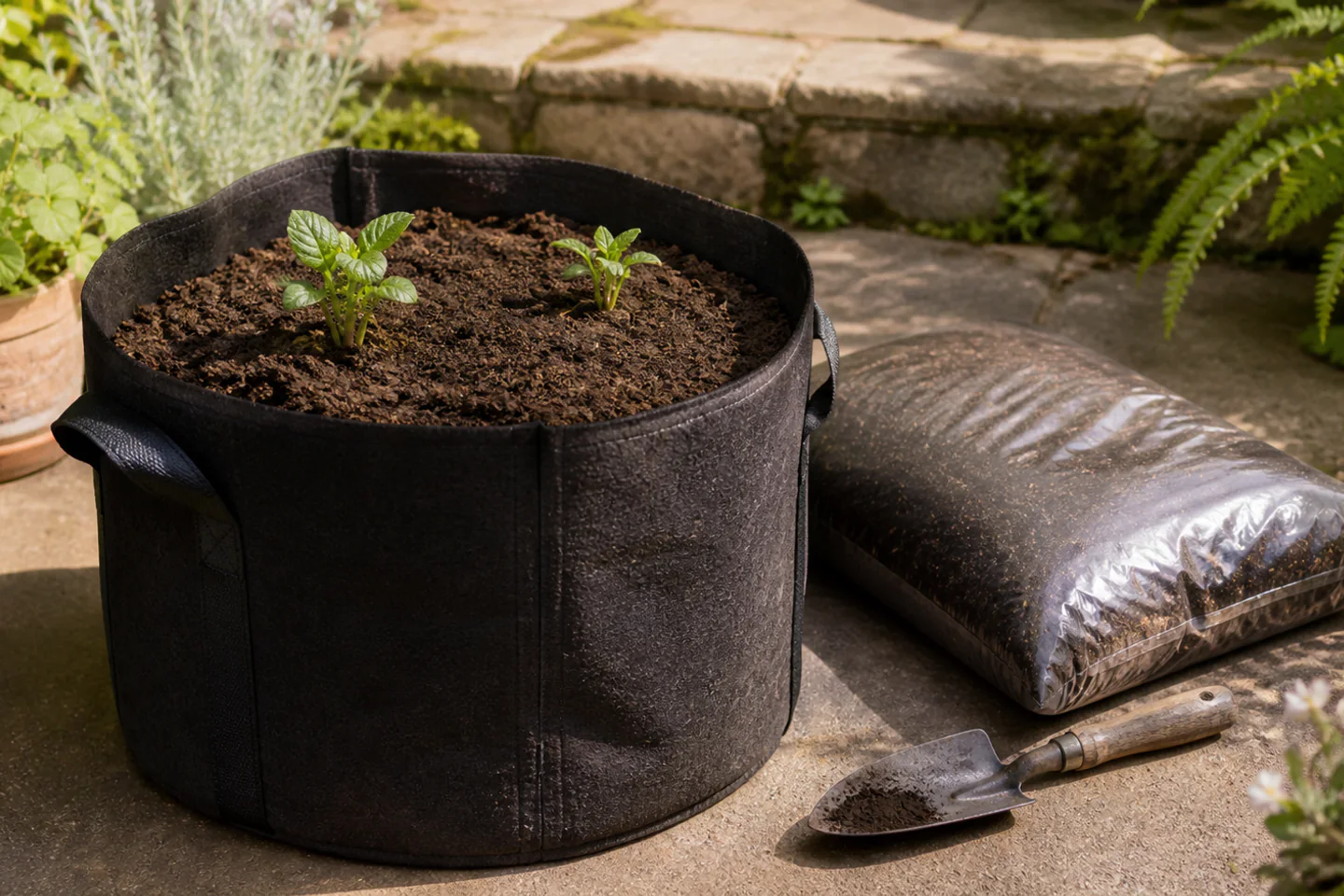
Grow one early variety in a large bag
Buy certified seed potatoes from a reputable current source, place two or three according to the bag volume and variety guidance, cover with compost and add more as shoots rise. Water evenly and harvest after flowering or foliage decline as the variety directs.
- 01
Use certified seed potatoes rather than supermarket eating potatoes with unknown disease history. Record the setting, measurement or observation that mattered so the next attempt can be changed for a reason rather than by guesswork.
- 02
Choose a first-early variety to shorten the wait and reduce the first project’s seasonal complexity. Record the setting, measurement or observation that mattered so the next attempt can be changed for a reason rather than by guesswork.
- 03
Give each plant enough compost volume and do not crowd a bag because the seed pieces look small. Record the setting, measurement or observation that mattered so the next attempt can be changed for a reason rather than by guesswork.
- 04
Earth up gradually without completely burying all active foliage at once. Record the setting, measurement or observation that mattered so the next attempt can be changed for a reason rather than by guesswork.
- 05
Watch local blight alerts and remove suspect material according to current horticultural guidance. Record the setting, measurement or observation that mattered so the next attempt can be changed for a reason rather than by guesswork.
What to expect
The harvest grows out of sight
Potato foliage can look vigorous while tuber yield depends on root volume, moisture, variety and the length of healthy growth.
Seed stock
Certified stock reduces disease risk and provides a named variety with a known maturity group. Chitting is optional for many home growers. In potato growing, this is worth checking before the next stage because a small adjustment now is easier than undoing a finished result.
Volume
A shallow crowded bag limits root and tuber space. More seed potatoes do not automatically produce more usable potatoes. In potato growing, this is worth checking before the next stage because a small adjustment now is easier than undoing a finished result.
Water
Large leaves and filling tubers use substantial water. Severe swings can reduce yield and contribute to defects. In potato growing, this is worth checking before the next stage because a small adjustment now is easier than undoing a finished result.
Disease
Late blight and other problems can move quickly in wet foliage. Local timing and clean seed matter more than a universal spray routine. In potato growing, this is worth checking before the next stage because a small adjustment now is easier than undoing a finished result.
Core method
Plan backwards from the mature crop
Choose seed and date
Select a named certified early variety and use current UK planting guidance for local frost and weather. In potato growing, this is worth checking before the next stage because a small adjustment now is easier than undoing a finished result.
Prepare the bag
Place a large draining bag in final sun, add a base layer of compost and space seed pieces rather than touching them. In potato growing, this is worth checking before the next stage because a small adjustment now is easier than undoing a finished result.
Earth up in stages
Add compost around stems as they grow, leaving healthy leaves exposed and preserving a watering lip. In potato growing, this is worth checking before the next stage because a small adjustment now is easier than undoing a finished result.
Harvest deliberately
Check the variety’s maturity, stop watering as appropriate and tip the bag onto a sheet so tubers are found without stabbing them. In potato growing, this is worth checking before the next stage because a small adjustment now is easier than undoing a finished result.
Useful products
Products with a clear job in the setup
The bag and compost are the reusable setup. Labels keep varieties and planting dates separate; buy live seed potatoes from a reputable seasonal source rather than an unverified marketplace listing.
GardenMate Five 30-Litre Fabric Grow Bags
Fabric bags are easy to store and their volume is large enough to teach container watering honestly.
Miracle-Gro Peat-Free Fruit and Vegetable Compost 40 L
A known bagged mix removes the uncertainty of unsuitable garden soil in containers.
Tildenet Wooden Plant Labels
A label prevents memory from becoming the weakest part of a seasonal experiment.
First project
Grow one early bag from planting to harvest
One labelled variety makes timing and yield meaningful.
- 01
Buy certified seed
Choose one named first-early variety from a reputable supplier and record its expected planting and harvest window. In potato growing, this is worth checking before the next stage because a small adjustment now is easier than undoing a finished result.
- 02
Prepare the container
Position the bag, add compost and confirm that drainage cannot stain or flood a vulnerable surface. In potato growing, this is worth checking before the next stage because a small adjustment now is easier than undoing a finished result.
- 03
Plant at the right density
Use the supplier’s spacing for the actual bag volume and cover with the recommended initial depth. In potato growing, this is worth checking before the next stage because a small adjustment now is easier than undoing a finished result.
- 04
Earth up and water
Add compost as shoots rise, protect from frost and check moisture more often as the canopy enlarges. In potato growing, this is worth checking before the next stage because a small adjustment now is easier than undoing a finished result.
- 05
Harvest and weigh
Follow maturity signs, tip the bag carefully and record the sound tuber weight and any pest or disease symptoms. In potato growing, this is worth checking before the next stage because a small adjustment now is easier than undoing a finished result.
What can wait
What can wait until the first result
A first crop needs healthy seed, space and water rather than a collection of specialist potato gadgets.
- 01
Many varieties at once
Different maturity dates and disease responses make one beginner bag harder to interpret. In potato growing, this is worth checking before the next stage because a small adjustment now is easier than undoing a finished result.
- 02
Routine pesticide use
Identify the problem, use cultural controls and follow current UK approvals; do not spray from habit. In potato growing, this is worth checking before the next stage because a small adjustment now is easier than undoing a finished result.
- 03
Saving tubers as next year’s seed
Home-saved stock can accumulate disease. Learn the crop first and follow current seed-health advice. In potato growing, this is worth checking before the next stage because a small adjustment now is easier than undoing a finished result.
Upgrade path
Upgrade the repeated limitation
Use the first yield record to choose more volume, different maturity or better watering.
Try it
£25–£60One large bag, compost and certified early seed
Planting, earthing up and harvest become clear.Extend harvest
£20–£60Separate bags of first-early and second-early varieties
Harvest windows spread without mixing identities.Improve resilience
£25–£100Mulch, measured irrigation and sturdier containers
Moisture swings become less severe.Grow in beds
VariableRotation plan, soil amendment and local disease strategy
A larger crop becomes sustainable across years.Safety & care
Do not eat green or damaged tubers
Potatoes contain glycoalkaloids, and light exposure can increase greening in tubers.
- Do not eat green, bitter, sprouted or badly damaged potatoes; follow current food-safety guidance. Follow current manufacturer, food-safety, electrical or local guidance wherever it applies.
- Keep developing tubers covered from light and store the harvest cool, dark and ventilated. Follow current manufacturer, food-safety, electrical or local guidance wherever it applies.
- Handle suspected blight material according to current local guidance and do not casually compost it. Follow current manufacturer, food-safety, electrical or local guidance wherever it applies.
- Use only crop-approved products at label rates and observe all harvest intervals. Follow current manufacturer, food-safety, electrical or local guidance wherever it applies.
Outside help
When outside help earns its place
An allotment or local gardening session can help with planting dates and blight patterns. A named variety guide is enough for one container crop.
Use one complete lesson that covers preparation, the main technique, troubleshooting and finishing. For a first potato growing project, following one coherent method is more useful than combining partial instructions from several creators.
Outside help earns its place when safe setup, equipment access or live correction would remove a real obstacle. Ask what materials, supervision and take-home result are included before booking.
Representative UK learning options checked 30 August 2026; local prices, access, materials and tutor support vary.
Sources
Where the guidance came from
The method is grounded in specialist, manufacturer and public guidance, then checked against recurring beginner problems and the exact products linked here.
-
01
Royal Horticultural Society · Potatoes
UK potato growing and harvest guidance.
Open source -
02
AHDB · Fight Against Blight
UK late-blight monitoring context.
Open source -
03
Garden Organic · Potatoes
Organic crop and disease guidance.
Open source -
04
Food Standards Agency · Potatoes
Food-safety context for green and sprouted potatoes.
Open source -
05
SASA · Seed potatoes
Seed-potato health and certification context.
Open source -
06
Amazon UK · Five 30-Litre Fabric Grow Bags
Exact Amazon UK product page or ISBN used for the recommendation; current price, seller, specification and availability should be confirmed.
Open source -
07
Amazon UK · Peat-Free Fruit and Vegetable Compost 40 L
Exact Amazon UK product page or ISBN used for the recommendation; current price, seller, specification and availability should be confirmed.
Open source -
08
Amazon UK · Wooden Plant Labels
Exact Amazon UK product page or ISBN used for the recommendation; current price, seller, specification and availability should be confirmed.
Open source
Guide information and links checked 30 August 2026.