Beginner’s guide · Play & perform
Play one clean riff,
then add the effects.
Begin with a comfortable, properly set up guitar, a tuner and a small practice amplifier. Clean sound makes fretting, timing and unwanted noise easier to hear.
Quick answer
Choose by comfort and setup, then practise through a clean amp
Try the guitar seated and standing if possible, checking neck feel, weight and control access rather than selecting by colour alone. Ask the retailer to confirm setup, string height and intonation. Tune every session, use a clean low-volume amplifier sound and play one simple riff on a single string with a metronome. Fret close behind each fret using the minimum pressure for a clear note, alternate the pick slowly and stop to remove buzz or unwanted open strings before adding distortion.
- 01
Comfort and a functional setup matter more than the logo. Excessively high strings, sharp fret ends or poor intonation make practice unnecessarily hard.
- 02
The guitar, cable and amplifier are a system. Confirm sockets, power supply and headphone behaviour rather than assuming a guitar starter pack contains everything.
- 03
Tune before practice. A clip-on tuner works without a loud room and teaches pitch stability.
- 04
Clean tone exposes buzzing, weak fretting and unwanted strings. Distortion can make a riff exciting but also masks what needs correcting.
- 05
Protect hearing and neighbours. Small modelling amplifiers or headphone outputs provide useful sound at controlled levels.
What to expect
The first obstacle can be the setup, not the fingers
A beginner cannot diagnose neck relief, nut slots and intonation by feel. A reputable shop setup prevents weeks of compensating for an instrument that is mechanically fighting back.
Body
Shape, weight and balance affect longer practice. A guitar that slides or digs into the ribs is less inviting.
Neck
Scale length, width and profile change the stretch. Smaller hands do not automatically need the shortest scale, so try rather than assume.
Strings
Light strings feel easier but still need correct action and intonation. Change one gauge deliberately and expect setup checks.
Amp
Speaker size and modelling features affect sound and complexity. A simple clean preset is the baseline.
Noise
Single-coil hum, poor cables and unmuted strings sound different. Diagnose before buying a noise gate.
Practice
Ten focused minutes on timing and relaxed motion can achieve more than an hour of restarting difficult songs.
Core method
Separate instrument setup from playing technique
Confirm a playable instrument
Buy from a seller with returns and setup support, or arrange a technician inspection. Check each fret for severe buzz, tune the open strings, compare octave notes and test every control and socket. Do not adjust the truss rod from a random video before understanding the symptom.
Build a safe signal chain
Place the amp where ventilation is clear, turn volume down and connect a sound instrument cable before powering on. Select a clean preset with effects bypassed. Use the correct mains supply, route cables away from feet and never open an amplifier cabinet or power section.
Learn one efficient movement
Tune, sit with neutral shoulders and hold a medium pick lightly. Fret a note just behind the metal fret, release excess pressure and alternate down/up strokes on one string. Use a slow metronome, playing short groups followed by silence to check tension.
Add muting and musical context
Use spare fretting-hand contact and the picking hand to stop unused strings sympathetically ringing. Move the riff across two strings only when each note remains clean. Record thirty seconds on a phone, listen for timing rather than tone and finish by wiping strings and placing the guitar securely.
Useful products
Products with a clear job in the setup
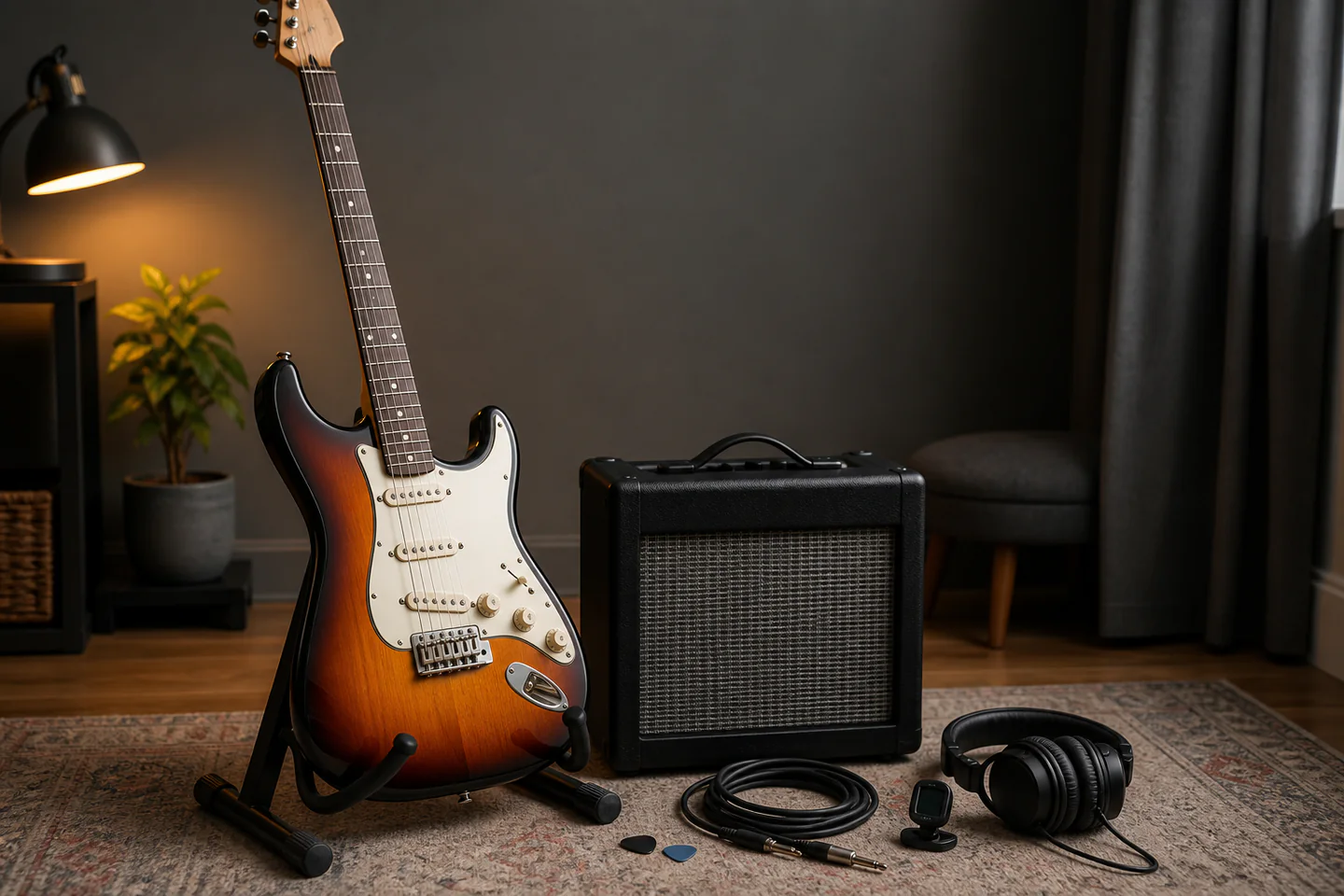
The Squier Debut Stratocaster is a plausible first full-size guitar when its shape and neck feel comfortable. Fender’s Mustang LT25 offers clean practice sound, headphones and effects that can be added gradually. The D’Addario Eclipse tuner solves the daily tuning job without depending on the amplifier. A cable, picks, stand and suitable headphones still need checking separately.
Squier Debut Series Stratocaster, Two-Colour Sunburst
The familiar Stratocaster layout is widely supported by lessons, accessories and technicians.
Fender Mustang LT25 Modelling Guitar Amplifier
A useful clean baseline and headphone option allow progression without immediate pedal purchases.
D’Addario Eclipse Headstock Tuner PW-CT-17BK
A headstock tuner is quick, portable and remains useful after every other part of the setup changes.
First project
Play one clean four-note riff to a click
One string removes chord shapes and lets the first week focus on fretting position, alternate picking, muting and time.
- 01
Tune all six strings
Check the target note and approach pitch gradually rather than overtightening.
- 02
Select a clean sound
Turn effects off, begin quietly and set enough level to hear buzz.
- 03
Fret close behind the wire
Use the lightest pressure that produces a clear sustained note.
- 04
Alternate the pick
Play down and up strokes slowly without gripping harder.
- 05
Add a metronome
Use a comfortable tempo and leave deliberate rests to release tension.
- 06
Record thirty seconds
Listen for even spacing and unwanted strings before changing tone.
What can wait
What can wait until the first result
The guitar and amp already contain enough sound to learn. Extra effects are most useful after the player can name the limitation they solve.
- 01
A pedalboard
Modelling amp effects can demonstrate delay, drive and modulation before separate boxes and power supplies.
- 02
Heavy string gauges
They change tension and may require setup work without helping basic timing.
- 03
A premium tube amplifier
Volume, maintenance and cost rarely suit the first home practice routine.
- 04
Fast solo courses
Clean notes, rhythm and muting create the foundation those lessons assume.
- 05
DIY amplifier repairs
Stored high voltage can remain lethal after unplugging; use a qualified technician.
Upgrade path
Upgrade the repeated limitation
Upgrade after the same mechanical, volume or sound limitation appears through several weeks of regular practice.
First clean riff
About £180–£450Set-up guitar, tuner and practice amp
Learn timing, fretting and muting.Song practice
About £250–£650Stand, strap, headphones and lessons
Build a repeatable daily routine.Specific sounds
About £400–£1,000Selected pedal or upgraded amp
Create tones the current model cannot.Band setup
About £800–£2,500+Reliable amp, cases and stage accessories
Rehearse and perform at controlled volume.Safety & care
Protect hearing, cables and mains equipment
Electric guitar is low-voltage at the instrument but the amplifier is mains equipment. Keep drinks away, stop at faults and never explore inside an amp chassis.
- Start at minimum volume, increase only to the level needed and use hearing protection or breaks in loud rehearsals.
- Use the manufacturer-specified mains lead and power supply, keep amp ventilation clear and stop if there is heat, burning smell, smoke or damaged insulation.
- Never open or repair an amplifier unless professionally qualified; capacitors can retain dangerous voltage after unplugging.
- Route cables away from walkways, use a stable stand and transport the guitar in a suitable case.
- Build practice time gradually, keep wrists and shoulders neutral and seek appropriate professional advice for persistent pain, numbness or hearing symptoms.
Outside help
When outside help earns its place
A structured online course can teach the first riff. A good tutor earns the cost by checking setup, posture, excess tension and a practice plan matched to music the learner actually wants to play.
Use a course that includes tuning, rhythm, muting and complete songs.
Bring the actual guitar and ask the tutor to check setup and practice comfort.
Representative UK learning options checked 18 August 2026; local prices, access, materials and tutor support vary.
Sources
Where the guidance came from
Manufacturers define instrument, amplifier and tuner operation. Teachers, technicians and player communities add practical evidence about setup quality, comfort, clean practice and realistic upgrading.
-
01
Fender · So you just got a new guitar
Manufacturer first setup, tuning and learning context.
Open source -
02
Fender · Guitar amp buying guide
Amplifier types, sizes and use cases.
Open source -
03
D’Addario · Eclipse tuner
Official tuner features and use context.
Open source -
04
JustinGuitar · Beginner course
Long-established structured beginner curriculum.
Open source -
05
Reddit · r/Guitar
Community evidence on first guitars, setups, amps and practice obstacles.
Open source -
06
Amazon UK · Debut Series Stratocaster, Two-Colour Sunburst
Exact product catalogue page or ISBN used for the recommendation; current price, seller, specification and availability should be confirmed.
Open source -
07
Amazon UK · Mustang LT25 Modelling Guitar Amplifier
Exact product catalogue page or ISBN used for the recommendation; current price, seller, specification and availability should be confirmed.
Open source -
08
Amazon UK · Eclipse Headstock Tuner PW-CT-17BK
Exact product catalogue page or ISBN used for the recommendation; current price, seller, specification and availability should be confirmed.
Open source
Guide information and links checked 18 August 2026.