Beginner’s guide · Cook & bake
Seal one simple fold well.
Cook the filling safely.
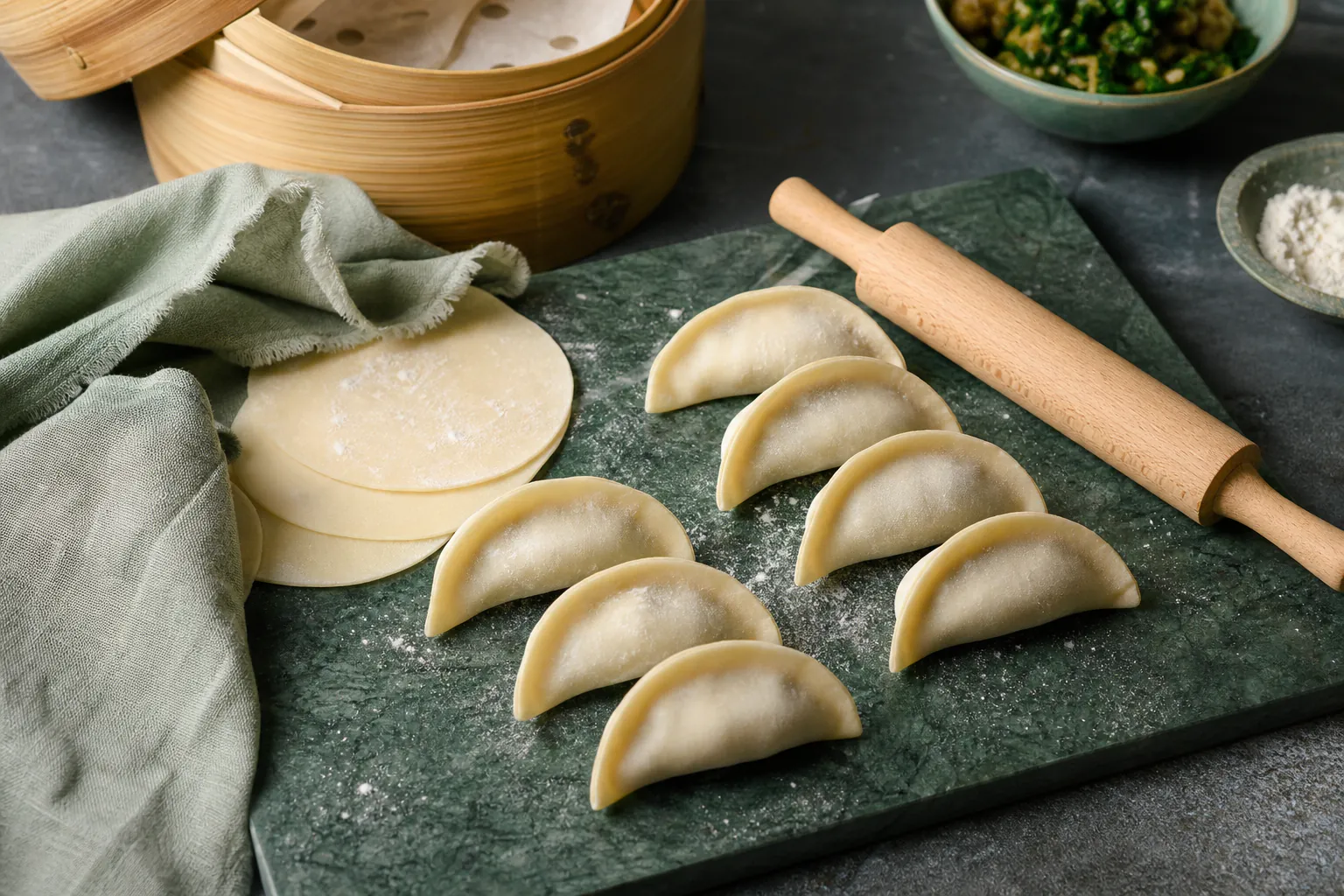
Start with shop-bought round wrappers and a finely chopped vegetable or fully controlled meat filling. Fold half-moons, pan-steam a small batch and learn moisture, seal and doneness before making wrappers or elaborate pleats.
Quick answer
Use a dry-enough filling and a complete seal
Buy fresh or frozen round dumpling wrappers from a suitable food retailer, keep them covered and prepare one filling recipe exactly. Place a measured teaspoon in the centre, dampen the rim lightly, press out air and seal a plain half-moon. Cook one test dumpling by the recipe method, check seasoning and doneness, then form and cook the batch without letting raw filling contaminate the serving area.
- 01
Filling leaks usually come from overfilling, wet edges, trapped air or wrappers drying out—not from a lack of decorative pleats.
- 02
Chop ingredients finely so the filling cooks evenly and does not puncture the wrapper with long hard pieces.
- 03
Raw meat filling cannot be safely tasted. Cook a small portion in a pan or test dumpling before adjusting seasoning.
- 04
Steam, boil and pan-steam produce different wrappers and handling demands. Learn one method before comparing all three.
What to expect
The simple fold is already a complete dumpling
Pleating looks impressive but sealing and balanced filling determine whether the dumpling survives cooking and tastes good.
Wrappers
Cold wrappers can crack and uncovered wrappers dry quickly. Defrost as directed and keep the stack under a barely damp towel.
Moisture
Watery vegetables and hot filling weaken the seam. Cool filling and squeeze or salt vegetables when the recipe specifies.
Quantity
A level teaspoon is easier to seal than an ambitious mound. Increase only when wrapper size and hand technique allow it.
Air
A trapped pocket expands and can burst. Press around the filling before sealing outward to the edge.
Cooking
Browning proves only the base is brown. Steam time and internal doneness still matter, especially with minced meat.
Freezing
Freeze uncooked dumplings separately on a tray before bagging so they do not become one block; follow the recipe for cooking from frozen.
Folding basics
Build around the wrapper’s moisture limit
Prepare the entire station first
Mix the dipping sauce, line a tray, set out a small water dish and cover the wrapper stack. Keep raw meat, used utensils and the clean finished-dumpling tray separated. If using a bamboo steamer, line it with perforated paper or suitable leaves and check that it sits securely over—not in—the simmering water.
Make the filling cohesive, not wet
Follow a tested recipe and cut ingredients evenly. Salted cabbage may need squeezing; mushrooms should be cooled after cooking; liquid seasonings must be measured. For meat mixtures, stir in one direction until slightly tacky so a small portion holds together. Refrigerate filling if assembly takes time.
Seal before decorating
Place a small measured amount at the centre. Moisten only the rim, fold into a half-moon, press around the filling to remove air and pinch the edge firmly from centre to ends. Set the dumpling seam-up without touching its neighbours. Add pleats later only if they do not compromise the seal.
Cook a test and use the correct endpoint
Cook one dumpling using the full method. For meat filling, verify safe internal cooking with appropriate temperature guidance rather than judging by wrapper colour. Taste the cooked test for salt and texture, adjust the uncooked filling with clean utensils, then cook the remaining batch in uncrowded rounds.
Useful products
A steamer, a wrapper rolling pin and a technique-rich book
The KitchenCraft bamboo steamer supports steaming but must fit the chosen pan safely. Its small beechwood rolling pin is designed for turning individual wrapper rounds while keeping the centre slightly thicker. Andrea Nguyen’s book becomes most useful when moving from purchased wrappers to regional doughs and folds.
KitchenCraft World of Flavours Two-Tier Bamboo Steamer 25 cm
The baskets separate batches and expose them evenly to steam when fitted and lined correctly.
KitchenCraft Small Revolving Rolling Pin 23 cm
The small pin leaves the other hand free to rotate each disc and control edge thickness.
Andrea Nguyen Asian Dumplings
The book explains why wrapper, filling, fold and cooking route belong together across distinct dumpling styles.
First batch
Make twenty half-moon dumplings
Use a tested recipe written for the wrapper and cooking method you have chosen. Do not combine an arbitrary filling with unrelated timing.
- 01
Prepare sauce and tray
Finish the clean serving components before raw filling enters the workspace.
- 02
Mix one filling
Chop evenly, control vegetable moisture and keep meat filling chilled until assembly.
- 03
Set out five wrappers
Keep the rest covered and work in small rounds so their edges remain flexible.
- 04
Fill consistently
Use a level teaspoon or the tested amount in the centre of each wrapper.
- 05
Remove air and seal
Dampen the rim, fold a half-moon and pinch firmly from centre to ends.
- 06
Cook a complete test
Use the full steam, boil or pan-steam method and verify meat doneness safely.
- 07
Adjust and finish
Correct seasoning only after tasting cooked filling, then form and cook uncrowded batches.
- 08
Cool leftovers promptly
Refrigerate cooked leftovers safely and freeze uncooked extras individually if the recipe permits.
What can wait
What can wait until plain seals survive cooking
Dumplings become a broad family of doughs and methods. One reliable half-moon is the foundation, not a lesser version.
- 01
Handmade wrappers
They add dough hydration, rolling speed and drying management. Ready-made rounds isolate filling and sealing for the first batch.
- 02
Elaborate pleats
Pleats redistribute one side of the wrapper and suit particular shapes. Practise after a plain seam seals reliably.
- 03
The checked bamboo steamer
Useful for steamed styles, but pan-steaming in a lidded frying pan may suit the first chosen recipe better.
- 04
Dumpling presses
They fit only certain wrapper sizes and can encourage overfilling. Hands reveal where moisture and air weaken the seam.
- 05
Several fillings at once
One batch lets you diagnose moisture, seasoning and cooking. Multiple fillings create different safety and timing problems.
Upgrade path
Add dough and regional shape deliberately
The next level is not merely more pleats; it is matching wrapper, filling and cooking method as one system.
Ready-made half-moons
About £8–£15 a batchWrappers, filling and lidded pan
Learn portion, air removal, seal and doneness.Steamed dumplings
About £18–£35Correctly fitted bamboo or metal steamer
Learn liner, spacing, condensation and steam management.Handmade wrappers
About £4 for a small pinFlour, hot or cold water dough and rolling station
Control thickness, elasticity and regional shape.Freezer batch system
About £5–£20Tray, labels and airtight freezer containers
Separate production from cooking while maintaining safe dates and instructions.Food safety
Separate raw filling from ready-to-eat food
Dumpling assembly creates many hand and surface contacts. Clean organisation matters as much as cooking time.
- Wash hands before assembly and after touching raw meat; clean boards, knives, bowls and handles that become contaminated.
- Never taste raw meat filling. Cook a sample fully and use a clean utensil for any later adjustment.
- Cook poultry, pork and other meat fillings thoroughly using current temperature guidance; wrapper translucency is not proof.
- Keep fillings chilled until needed, cool cooked leftovers promptly and label frozen uncooked batches with contents and date.
- Place steamers on stable pans, keep water below the food, protect hands from escaping steam and never let the pan boil dry.
Outside help
When a class adds useful hand feedback
A class is optional. It helps most with handmade wrappers, regional shaping and seeing the correct filling texture in real time.
Watch hand position, then keep the written filling, cooking and safety instructions beside the stove.
Check whether participants mix filling, make dough, fold and cook rather than only assembling prepared parts.
Free technique routes and representative UK workshop pricing checked 2 August 2026; ingredients and wrapper-making time vary.
Sources
Where the guidance came from
UK food-safety guidance establishes raw-meat handling; established cooking and specialist dumpling sources support moisture, folding and cooking decisions.
-
01
Food Standards Agency · Cooking your food
Safe cooking temperatures, cross-contamination and reliable doneness guidance.
Open source -
02
Food Standards Agency · Chilling
Keeping fillings cold and cooling cooked leftovers promptly.
Open source -
03
BBC Good Food · Gyoza
Accessible filling, folding and pan-steaming method for a first dumpling style.
Open source -
04
Red House Spice · Dumpling guide
Specialist explanation of wrapper dough, rolling, filling and cooking routes.
Open source -
05
Amazon UK · KitchenCraft World of Flavours bamboo steamer
Exact product page, model or ISBN, observed price and availability checked for this guide.
Open source -
06
Amazon UK · KitchenCraft small beechwood revolving rolling pin
Exact product page, model or ISBN, observed price and availability checked for this guide.
Open source -
07
Amazon UK · Andrea Nguyen Asian Dumplings
Exact product page, model or ISBN, observed price and availability checked for this guide.
Open source
Guide information and links checked 2 August 2026.